

Airveek field guide
Dog Harness Detail Product Photo: Show Straps, Clips, and Fit Cues
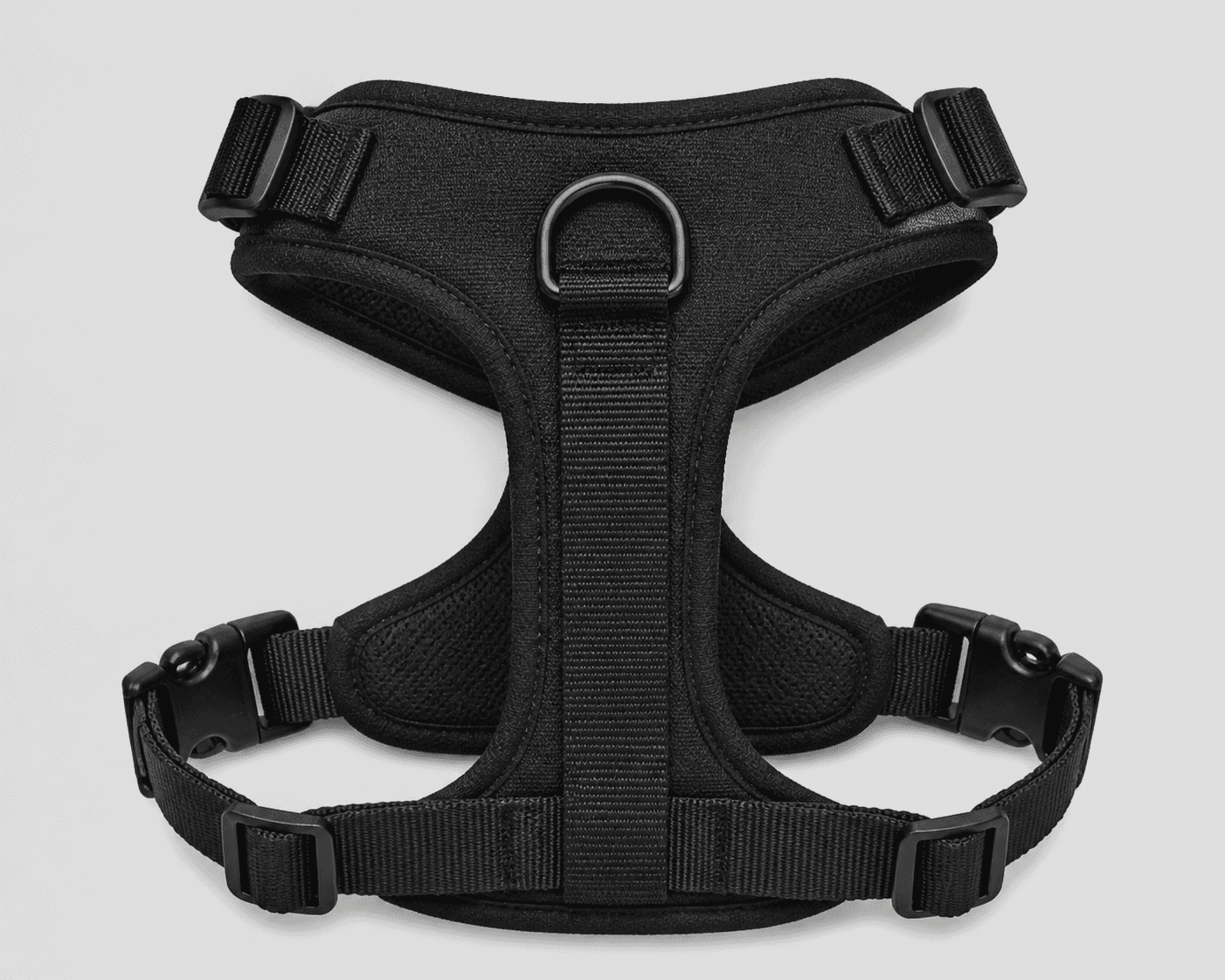
Use the supplied harness reference to create a detail-led product-photo set: keep one flat view for the full silhouette, make a close crop prove the adjusters, side buckles, webbing, padded panels, and center D-ring, and add a worn-dog view for placement and scale. In Airveek, keep the same shape, hardware, black color, and supplied morrow mark; review the detail crop full-size and at mobile size before export.
Search task: dog harness detail product photo
Written by LIKA
The buyer question
Which detail should this dog harness product photo prove before a shopper buys?
Quick setup
- Goal
- Ecommerce product gallery detail image and marketplace supporting image
- Output
- 1:1 square-safe strap and hardware detail crop, 4:5 mobile-safe worn-dog placement crop, 1500 × 1500 preferred square master when possible
- Goal
- store-listing
- Mode
- product-scene
- Scene
- studio
Example Airveek result
How to create it
1. Add the supplied product and brand references
Upload generic-dog-harness.png as the identity reference and add public/images/morrow/morrow-logo.png as the second input for the fictional demo-brand version. Use the harness reference to preserve the black color, T-shaped silhouette, webbing paths, padded panels, two upper adjusters, two lower buckles, and center D-ring.
2. Start from the Airveek product-photo setup
In Airveek's product-fashion creator, use Mode product-scene, Scene studio, and Goal store-listing as the baseline. Keep that setup for the clear flat product view, then direct the separate worn-use and close-detail views with the product-specific prompt.
3. Give each harness view one job
Use the flat view to answer what the product is, the worn-dog view to show placement and visual scale, and the close view to prove where the straps, adjusters, buckles, webbing, padded panels, and D-ring sit. Keep the same supplied harness identity in all three views.
4. Light the black materials for separation
Use soft directional light with gentle fill and a quiet neutral background. Raise separation between the black webbing and padded panels without lifting the harness into gray, and keep metal or plastic buckles free from bright glare that hides their edges.
5. Keep the close crop useful on mobile
Center the key adjuster-and-buckle area, but leave enough surrounding harness to preserve context. Keep the main detail near the center-safe area, leave margin for a square crop, and check the full-size image and a 240 × 240 thumbnail for visible strap paths and hardware.
6. Keep the brand mark exact
When branding is shown, use the supplied logo reference and preserve the exact lowercase morrow wordmark with both sparkle stars together. Remove every other readable word, claim, floating mark, or retailer treatment before choosing a result.
7. Export with the fit boundary intact
Keep the largest clean master and use the detail crop as a supporting gallery image alongside the flat and worn views. Confirm the destination's current file, pixel, background, and metadata requirements before resizing. Use the product's verified size chart and fit instructions for exact fit decisions; let the image prove only what it visibly shows.
Tested prompt
Use the supplied fictional morrow logo reference as the second input and the supplied adjustable dog walking harness as the identity reference. Create a close ecommerce detail photo of one harness that clearly shows the webbing straps, upper side adjusters, lower side buckles, padded panel edges, and center back D-ring. Preserve the exact harness shape, black appearance, materials, hardware, and strap layout. Use soft directional commercial light with gentle fill, a quiet neutral background, and a crop that keeps enough of the harness visible to connect the detail to the whole product. For any visible branding, use only the exact lowercase wordmark "morrow" with its two sparkle stars. Do not add other readable text, dimensions, features, claims, extra hardware, extra products, watermarks, retailer marks, or promotional overlays.Recorded settings
- Goal
- store-listing
- Mode
- product-scene
- Scene
- studio
Common problems and fixes
Problem: The close crop becomes a black shape and the webbing blends into the padded panels.
Fix: Use soft side light with gentle fill, a quiet neutral background, and controlled exposure. Compare the black appearance with the supplied source and keep the buckle edges free from glare.
Problem: An adjuster or buckle disappears at the edge of the image.
Fix: Widen the crop slightly, move the key hardware toward the center-safe area, and leave adjacent webbing and panel context visible before retesting the 240 × 240 thumbnail.
Problem: The worn-dog view hides the harness under fur, motion, or a busy park scene.
Fix: Use one calm standing dog, soft daylight, and restrained background detail. Keep the harness unobscured and large enough to show placement, while reserving close inspection for the studio detail frame.
Problem: The result changes the buckle, D-ring, strap count, panel shape, or black material.
Fix: Repeat the supplied harness identity constraints, compare the result beside the source, and keep only a frame whose visible geometry and materials match.
Problem: The supplied mark is distorted or extra words appear.
Fix: Re-add the supplied logo reference, preserve the exact lowercase morrow wordmark with both sparkle stars together, and remove every other readable word or floating mark before export.
Problem: The image is written as proof of a universal fit, safety, strength, or comfort claim.
Fix: Use the image to show visible placement and adjustment points only. Tie exact fit, size, safety, strength, comfort, and performance statements to verified product information for the specific harness.
What to double-check
- The supplied reference establishes visible black color, harness shape, webbing, padded panels, buckles, adjusters, and a center D-ring. It does not establish exact dimensions, size range, strength, comfort, durability, or performance.
- A worn-dog image can show placement and visual scale, but it cannot prove that the harness fits every dog or replace the product's own size chart and fit instructions.
- A close crop can make straps and hardware easier to inspect, but it cannot prove safety, escape resistance, load rating, comfort, or another unshown product property.
- The supplied source reference is the only selected page media in this draft. Create and review a fresh logo-aware Airveek result before replacing it with generated media.
- Keep the largest clean export and confirm the destination's current image dimensions, file format, background, and metadata requirements before use.
Why this works
A harness detail image earns its place when it answers a small, concrete question quickly. The close crop enlarges the straps, adjusters, buckles, webbing, padded panels, and D-ring; the flat view keeps the whole product identifiable; and the worn-dog view adds placement and visual scale. Separating those jobs gives shoppers more useful proof without asking one image to promise a fit it cannot establish.
Before you export
- Compare every new result with the supplied harness reference and preserve its black appearance, T-shaped silhouette, webbing, padded panels, two upper adjusters, two lower buckles, and center D-ring.
- Keep the close crop focused on visible straps and hardware while leaving enough surrounding harness to connect the detail to the whole product.
- Use soft directional light with gentle fill so black webbing and padded panels separate without a gray cast or buckle glare.
- Keep the worn-dog frame separate from the detail frame and use it for placement and visual scale, not a universal-fit claim.
- When branding is shown, use only the supplied exact lowercase morrow wordmark with its two sparkle stars and no other readable brand text.
- Inspect the full-size image, intended crop, and 240 × 240 mobile thumbnail for strap visibility, hardware edges, product identity, and crop safety.
- Use verified product information for exact size, fit, safety, strength, comfort, durability, and performance claims.
Common questions
Which detail should a dog harness product photo prove?
Make the visible adjustment system easy to inspect: show the strap paths, upper adjusters, lower buckles, webbing, padded panel edges, and center D-ring shown in the supplied reference. Keep enough of the harness in frame to connect the close crop to the full product. The image can show visible construction and placement cues, but it cannot establish exact fit for a particular dog.
Should the detail image show the harness on a dog?
Use a worn-dog image as a separate supporting view for placement and visual scale, and keep the close crop focused on the straps and hardware. Keep a flat view for complete-product identification. Google Merchant Center describes additional images as a place for product use, different angles, and close parts, which fits this three-view structure.
How do I keep black harness straps visible without losing their color?
Use soft directional light with gentle fill, a quiet neutral background, and enough exposure to separate webbing from padded panels without turning the harness gray. Control highlights on the buckles, keep the key hardware near the center-safe area, and inspect both the full-size image and a 240 × 240 thumbnail. A public photography discussion also surfaces volume and proportion as the hard part of staging a harness, so keep shaping restrained and preserve the supplied geometry.
Can a dog harness detail photo prove that it fits every dog?
No. It can show where the visible straps, buckles, and adjustment points sit, and a worn view can add placement and visual scale. Exact fit depends on the specific dog and harness, so use the product's verified size chart and fit instructions for that decision. Do not turn an image into a universal-fit, safety, strength, or comfort claim.
Further reading
- The Complete Guide to Ecommerce Photography — Shopify
- Image link [image_link] - Google Merchant Center Help — Google Merchant Center Help
- Additional image link [additional_image_link] - Google Merchant Center Help — Google Merchant Center Help
- How do I properly photograph complex products like a dog harness? — Reddit r/productphotography discussion
- Shopify Help Center | Taking product photographs — Shopify Help Center
- How to Fit the PetSafe Comfort Harness on Your Pet — PetSafe Support
- Marketplace/category reference — Amazon marketplace reference