

Airveek field guide
Wide-Neck Baby Bottle Lifestyle Product Photo: Show Use and Scale
Use the supplied wide-neck baby feeding bottle reference to plan one believable held-use scene: keep the clear bottle body, wide threaded neck, white cap, clear nipple, and any shown parts unobscured while a hand or quiet nursery surface provides scale. In Airveek, choose product-scene, lifestyle, and social-post, then leave margin for 4:5 and 1:1 mobile crops. Use listing and detail frames for proof that context cannot provide.
Search task: baby bottle lifestyle product photo
Written by LIKA
The buyer question
How do I show this baby bottle in a believable setting without hiding its scale or important details?
Quick setup
- Goal
- Ecommerce product-page supporting gallery and social crop
- Output
- 4:5 portrait lifestyle frame, 1:1 centered mobile-safe crop, 240 × 240 mobile-thumbnail check, Largest available master before destination-specific resizing
- Goal
- social-post
- Mode
- product-scene
- Scene
- lifestyle
Example Airveek result
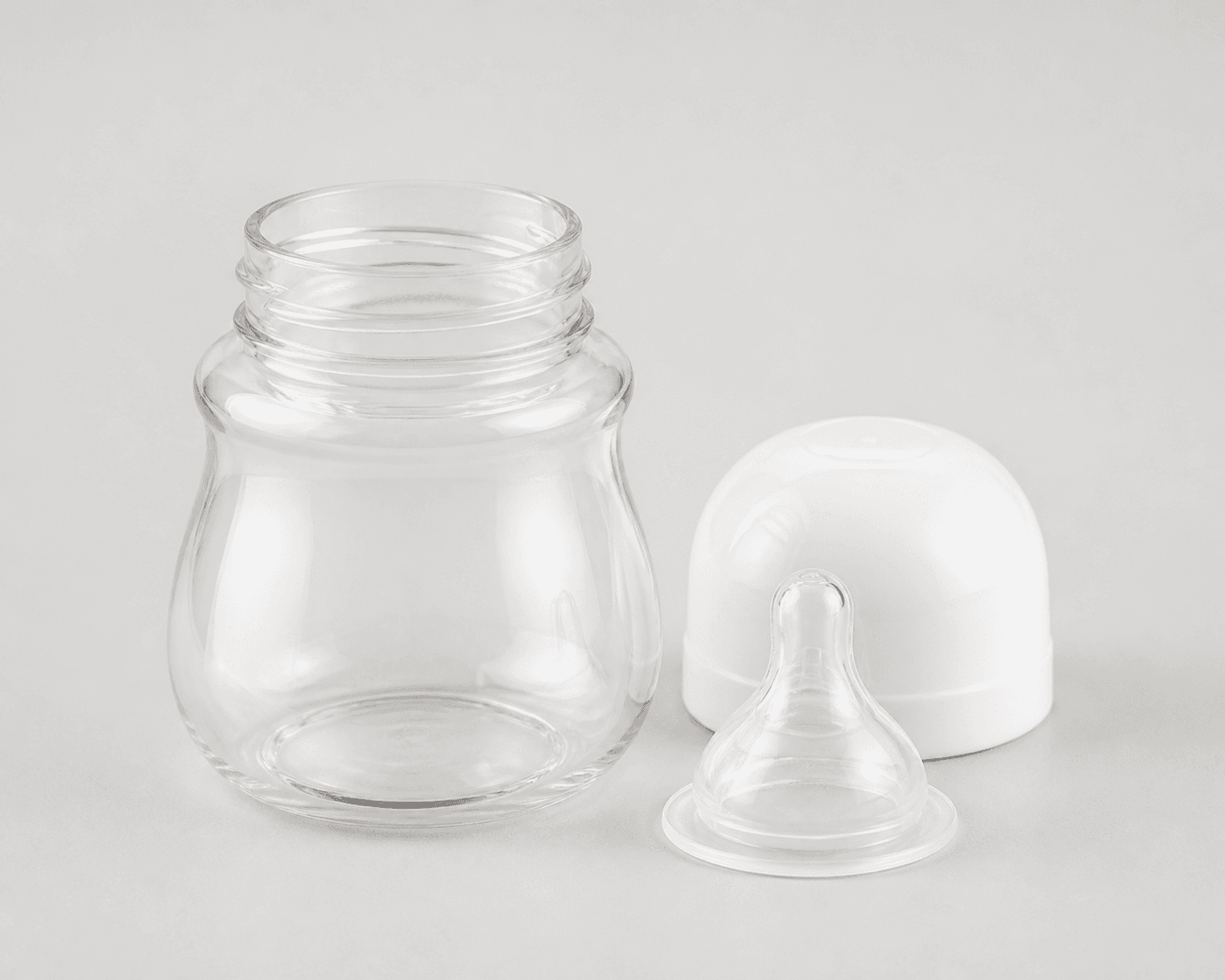
How to create it
1. Upload the supplied references
Add the supplied baby bottle reference as the product input. When the fictional demo brand is shown, add the supplied logo reference as the second input so the exact lowercase morrow wordmark and both sparkle stars can be placed naturally without inventing another mark.
2. Choose the lifestyle setup
In Airveek's product-fashion creator, set Mode to product-scene, Scene to lifestyle, and Goal to social-post. Keep this job focused on believable context and relative scale; use the listing sibling for complete-product identification and the detail sibling for close cap, nipple, and neck inspection.
3. Build one quiet scale cue
Choose either a secondary caregiver hand or an unmarked nursery-table surface as the scale cue. Keep the cue simple, place it behind or beside the bottle, and preserve the clear body, wide neck, cap, nipple, and shown parts as the first things the viewer can read.
4. Light for clear and white parts
Use broad diffused window or softbox light with gentle fill. Avoid a hard highlight across the clear body, white cap, or nipple, and keep enough edge contrast that the product does not disappear into a pale background. Do not use lighting, props, or copy to imply a product specification.
5. Paste the bottle-specific prompt
Use the prompt below to hold the visible product identity steady while adding held-use or nursery context. Keep the exact lowercase morrow mark with both sparkle stars together only when the supplied fictional demo logo is part of the scene.
6. Generate and review before export
Run a fresh lifestyle job from the same bottle and logo references when the workflow is available. Compare the result with the supplied reference at full size, in a 4:5 portrait crop, in a centered 1:1 crop, and at 240 × 240. Keep only a result with the same visible shape and parts, a readable scale cue, and no invented text or claims.
Tested prompt
Use the supplied wide-neck baby feeding bottle reference and the supplied fictional logo reference as the only inputs. If the fictional demo brand is shown, apply the exact lowercase wordmark "morrow" with its two sparkle stars naturally to the product surface or a small package element; preserve the supplied mark and add no other readable brand text. Create one premium ecommerce lifestyle photo for one wide-neck baby feeding bottle. Keep the exact clear bottle body, wide threaded neck, white rounded cap, clear nipple, and detached parts shown in the reference unchanged. Place the complete bottle in a believable held-use or quiet nursery-table scene that gives a simple scale cue while keeping the product dominant, unobscured, and easy to crop for mobile. Use soft diffused window light, gentle fill, a warm neutral setting, and a clear three-quarter view. Keep the bottle body, neck, cap, nipple, and any shown parts sharp. Do not add a baby, feeding liquid, medical or safety claims, age or capacity claims, invented features, extra bottles, other readable text, watermarks, retailer logos, or promotional overlays.Recorded settings
- Goal
- social-post
- Mode
- product-scene
- Scene
- lifestyle
Common problems and fixes
Problem: The bottle becomes too small against the nursery setting or disappears beside a hand.
Fix: Remove background objects, move the camera closer, reduce the scale cue, and retest the 4:5 crop and 240 × 240 thumbnail before export.
Problem: The clear body or white parts disappear into the background.
Fix: Shift to a slightly darker or warmer neutral background, use broad side light with gentle fill, and check the neck, cap, nipple, and edges at full size and thumbnail size.
Problem: A hand, blanket, or crop hides the neck, cap, nipple, or shown parts.
Fix: Move the hand behind the product or use an unmarked table surface, pull back slightly, and preserve margin around the bottle for both portrait and square crops.
Problem: The generated bottle changes shape, finish, color, visible parts, or the supplied mark.
Fix: Compare against the supplied reference, repeat the identity constraints and exact lowercase morrow mark, and reject the changed result.
Problem: The scene adds a baby, feeding liquid, extra accessories, invented text, or an unsupported product claim.
Fix: Return to the supplied bottle and logo references, remove the added element, and keep the lifestyle frame limited to visible context, scale, and product identity.
What to double-check
- The supplied reference shows the visible bottle body, wide neck, cap, nipple, and detached parts; it does not establish capacity, material composition, flow rate, included-pack count, age guidance, cleaning method, or safety performance.
- A lifestyle photo can show context, apparent scale, and visible product identity. It cannot prove feeding outcomes, leak performance, safety, exact dimensions, or specifications that are not visible.
- The current ECO15 content kit contains one partial saved JPEG but no complete manifest, usable recording, or image-review pass. It is not represented as generated page media; create and inspect a fresh lifestyle result before using generated media in a gallery or campaign.
- Keep this lifestyle job separate from the clean listing frame and the close cap-and-nipple detail frame so each image answers one shopper question.
Why this works
The lifestyle job gives the shopper a believable held-use setting and a simple scale cue without asking the room to prove every product detail. The complete bottle remains the visual anchor, while the clear body, wide threaded neck, white cap, clear nipple, and shown parts stay readable. The listing sibling can handle fast whole-product identification, and the detail sibling can handle close cap-and-nipple inspection.
Before you export
- Compare the result with the supplied reference: clear bottle body, wide threaded neck, white cap, clear nipple, detached parts, finish, and color should remain consistent.
- Keep one complete bottle dominant and unobscured; use one hand or one unmarked surface as a scale cue, not as a competing subject.
- Inspect the 4:5 portrait crop, centered 1:1 crop, and 240 × 240 mobile thumbnail so the bottle, neck, cap, nipple, and shown parts still read at small size.
- When branding is shown, use the supplied exact lowercase morrow wordmark with its two sparkle stars and no other readable brand copy.
- Verify capacity, dimensions, materials, included parts, cleaning, feeding, and safety information from product documentation rather than from the image.
Common questions
How much setting should a baby bottle lifestyle photo include?
Use enough of a quiet nursery or home setting to make the moment and relative scale believable, then stop before the room competes with the bottle. Keep one complete bottle dominant, with the body, wide neck, cap, nipple, and shown parts visible. A clean listing frame and a close detail frame should handle the jobs that context cannot.
How can I show scale without letting a hand hide the bottle?
Use one secondary caregiver hand or one unmarked table surface as the scale cue. Keep the bottle in front, leave the wide neck and cap unobstructed, and frame enough of the body to understand the relationship. If the hand becomes the first thing you notice, simplify the scene or switch to the table cue.
Should I show a baby or feeding liquid in the lifestyle frame?
Not for the first direction. A quiet held-use or nursery-table scene gives context and scale while keeping the bottle and its visible parts clear. Add a more active use variation only as a separate test, and remove anything that covers the product or implies a feeding, health, or safety outcome the image cannot prove.
Can a lifestyle photo prove the bottle's capacity, materials, or safety?
No. The image can show visible shape, parts, context, and apparent scale. Capacity, dimensions, material composition, flow rate, cleaning instructions, included parts, age guidance, feeding outcomes, and safety information should come from verified product information or testing rather than visual inference.
How should I use the fictional morrow mark in the demo?
When the fictional demo brand is shown, add the supplied logo reference as the second input and preserve the exact lowercase morrow wordmark with its two sparkle stars together on the product surface or a small package element. Keep every other readable brand text and floating mark out of the frame.
Further reading
- Platform image requirement — Google Merchant Center Help
- Shopify product photography workflow — Shopify
- Marketplace/category reference — Amazon marketplace reference