

Airveek field guide
Yoga Mat Detail Product Photo: Show the Surface and Edge Clearly
To make a yoga mat detail product photo useful, prove the visible surface and side edge first: those cues let a shopper judge texture and apparent thickness. Use the supplied mat as the identity reference, keep the purple color, roll, strap, and geometry unchanged, and use a close square-safe crop with soft side light. Pair it with a separate floor-use view for context and verified product information for exact measurements.
Search task: yoga mat detail product photo
Written by LIKA
The buyer question
Which detail should this yoga mat product photo prove before a shopper buys?
Quick setup
- Goal
- Ecommerce product gallery detail image
- Output
- 1:1 square-safe detail crop, 240 × 240 mobile-thumbnail check, 1500 × 1500 preferred square master when possible
- Goal
- store-listing
- Mode
- product-scene
- Scene
- studio
Example Airveek result
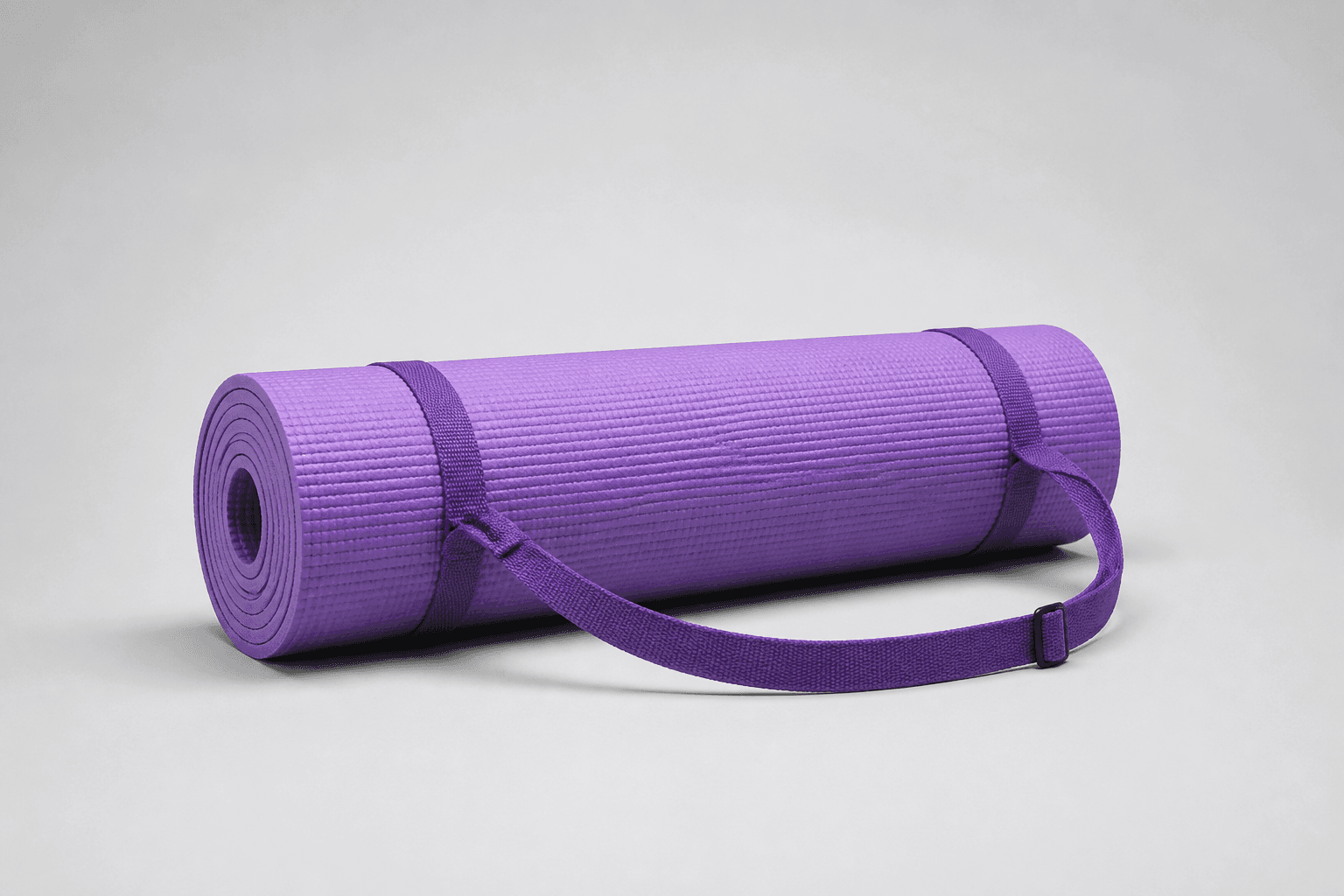
How to create it
1. Add the two supplied references
Upload generic-yoga-mat.png as the identity anchor and add public/images/morrow/morrow-logo.png as the second input for the fictional demo-brand version. Use the mat reference to preserve the purple color, rolled form, textured surface, side edge, strap, and visible geometry.
2. Choose the recorded Airveek baseline
In Airveek’s product-fashion creator, start with the captured baseline: Mode set to product-scene, Scene set to studio, and Goal set to store-listing. Use that baseline for the clean setup, then direct this page’s detail job with the surface-and-edge prompt.
3. Give the close frame one job
Make the detail view answer what the mat’s visible surface and side edge look like. Keep the textured proof large enough to inspect while leaving enough mat around it to preserve product context. Let the listing sibling handle the full rolled product and the lifestyle sibling handle floor use.
4. Light for texture and true color
Use controlled soft side light with gentle fill so the surface pattern has relief without harsh glare or a color cast. Keep the background quiet and the edge readable instead of adding props that compete with the mat.
5. Keep the mark exact
When branding is shown, place the supplied exact lowercase morrow wordmark with its two sparkle stars naturally on the product or package. Keep that mark together and remove every other readable brand word, floating mark, or promotional treatment.
6. Compare full size and mobile scale
Compare the result beside the supplied mat reference at full size, in the intended square crop, and at a 240 × 240 mobile check. Confirm that the surface, edge, purple color, rolled form, strap, crop safety, and exact mark remain clear.
7. Pair detail with scale context
Use a separate floor-use or wider rolled-mat image to give shoppers context for use and visual scale. Keep exact thickness, length, width, and roll-up measurements in verified product information.
8. Export for the destination
Keep the largest clean export until the destination’s current format, pixel, file-size, and image rules are confirmed. Use the detail view as a supporting gallery image, and preserve the close crop’s surface and edge proof through final resizing.
Tested prompt
Use the supplied thick non-slip exercise mat reference at public/images/airveek/content-reference/generic-yoga-mat.png as the identity anchor and the supplied fictional morrow logo reference at public/images/morrow/morrow-logo.png as the second input. Create one close-up ecommerce detail photo of the same mat that proves the visible textured surface and side edge before a shopper buys. Preserve the exact purple color, rolled form, visibly shown thickness, surface pattern, and carry strap; change only camera distance, crop, background, and light. Place the exact lowercase wordmark "morrow" with its two sparkle stars naturally on the product or package when branding is shown; add no other readable brand text. Use controlled soft side light, gentle fill, a quiet neutral setting, and a square-safe crop with the surface and edge centered and readable at mobile size. Do not invent dimensions, non-slip performance, materials, cushioning, safety claims, extra products, watermarks, retailer marks, or promotional overlays.Recorded settings
- Goal
- store-listing
- Mode
- product-scene
- Scene
- studio
Common problems and fixes
Problem: The surface looks flat or the pattern disappears.
Fix: Move to soft side light with gentle fill, quiet the background, and keep the crop close enough for the texture to read without harsh hotspots.
Problem: The side edge is clipped or too small to judge.
Fix: Pull back slightly, leave breathing room around the edge, and keep the proof inside the square-safe area before retesting the mobile thumbnail.
Problem: The mat shifts in color, roll, strap, or visible geometry.
Fix: Reuse the supplied mat reference, repeat the identity constraints, compare beside the source at full size and mobile scale, and keep only the result that matches.
Problem: The floor scene or collage takes over the detail job.
Fix: Reduce the scene to one supporting use cue and generate the surface-and-edge close view independently. Keep floor context and visual scale in a separate image.
Problem: The supplied mark is distorted or extra words appear.
Fix: Re-add the supplied logo reference, preserve the exact lowercase morrow wordmark with its two sparkle stars together, and remove every other readable word or floating mark before export.
Problem: The image implies exact thickness, roll-up size, or non-slip performance.
Fix: Remove rulers, badges, callouts, and invented claims. Use visible imagery for surface and edge cues, and use verified product information for specifications and performance statements.
What to double-check
- The supplied reference shows a purple rolled mat, textured surface, visible side edge, and carry strap; it does not establish exact thickness, length, width, material composition, cushioning, or non-slip performance.
- A close edge view can show apparent thickness, but it cannot prove an exact measurement. Use verified product information for dimensions and roll-up size.
- A floor-use scene can show context and a visual scale cue, but it cannot prove traction, cushioning, safety, durability, or another unshown performance property.
Why this works
The detail job gives the shopper one clear proof: what the mat’s visible surface and side edge look like up close. Soft side light creates relief across the texture, while a square-safe crop keeps the proof readable in a small gallery thumbnail. The rolled form and a separate floor-use image handle visual scale and use without asking the close crop to prove exact measurements or performance.
Before you export
- Compare every result with the supplied mat reference and preserve the visible purple color, rolled form, textured surface, side edge, strap, and geometry.
- Keep the surface and side edge centered, unobscured, and large enough to read in the intended square crop.
- Use soft side light with gentle fill so the texture has relief without glare or a color cast.
- Use the rolled form and a separate floor-use view for visual scale and use; keep exact measurements in verified product information.
- When branding is shown, use only the supplied exact lowercase morrow wordmark with its two sparkle stars and no other readable brand text.
- Inspect the full-size image, intended crop, and 240 × 240 mobile thumbnail for surface, edge, color, strap, geometry, and mark legibility.
- Keep the largest clean export and confirm the destination’s current image requirements before final resizing.
Common questions
Which detail should this yoga mat product photo prove first?
For the detail frame, prove the visible textured surface and side edge first. Keep that proof large enough to inspect while leaving enough mat around it to preserve product context. Use a separate rolled or floor-use view for visual scale and everyday use rather than making the close crop do every job.
Can a close yoga mat photo prove exact thickness or roll-up size?
No. A close edge view can show apparent thickness and a rolled view can give a visual cue for the packed form, but neither proves an exact measurement. Keep length, width, thickness, and roll-up size tied to verified product information for the exact mat shown.
How do I make a textured yoga mat surface readable without changing its color?
Use controlled soft side light with gentle fill, a quiet neutral background, and a close crop that keeps the surface and side edge in the center-safe area. Compare the result beside the supplied reference at full size and in a 240 × 240 mobile check before export.
Where should the supplied morrow mark go in the fictional demo version?
When branding is shown, use the supplied logo reference and place the exact lowercase morrow wordmark with its two sparkle stars naturally on the product or package. Keep the mark together, preserve its shape, and keep every other readable brand word or promotional overlay out of the frame.
Further reading
- Marketplace/category reference — Amazon marketplace reference
- Image link [image_link] - Google Merchant Center Help — Google Merchant Center Help
- The Complete Guide to Ecommerce Photography — Shopify