

Airveek field guide
Yoga Mat Product Photography Guide: Build a Complete Airveek Set
Start with the supplied thick non-slip exercise mat reference, then plan three separate Airveek views: a clean rolled listing frame for product identity, an on-floor lifestyle frame for use and visual scale, and a close crop for the ridged surface, rolled edge, straps, and buckle. Keep the visible purple color and product geometry consistent, use the supplied lowercase morrow mark exactly when branding is shown, and inspect every crop at mobile size before export.
Search task: yoga mat product photography guide
Written by LIKA
The buyer question
How do I plan a complete product-photo set for this yoga mat from one accurate source asset?
Quick setup
- Goal
- Ecommerce product gallery and marketplace-ready product-photo planning
- Output
- 1:1 square-safe rolled listing crop, 4:5 mobile-safe on-floor lifestyle crop, 1:1 square-safe surface-and-edge detail crop, 240 × 240 mobile-thumbnail check, 1500 × 1500 preferred square master when possible
- Mode
- product-scene
- Detail goal
- store-listing
- Detail scene
- studio
- Listing goal
- store-listing
- Listing scene
- studio
- Lifestyle goal
- social-post
- Lifestyle scene
- lifestyle
Example Airveek result
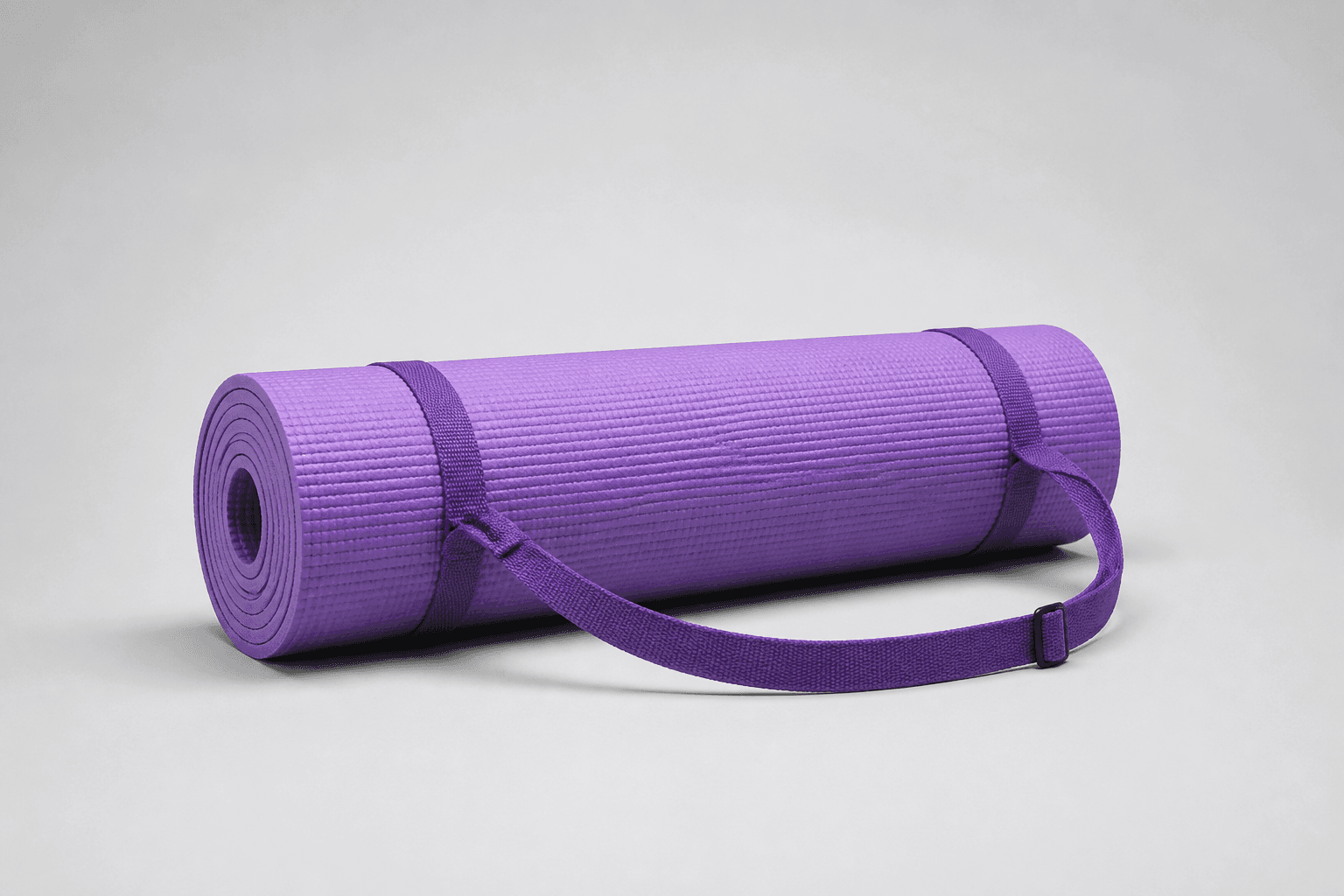
How to create it
1. Define the three buyer questions
Plan one clean listing frame for what the product is, one on-floor lifestyle frame for how it reads in use and relative scale, and one close frame for the ridged surface and rolled edge. Keep these jobs separate so a collage or distant scene does not shrink every proof area.
2. Upload the supplied references
Add generic-yoga-mat.png as the identity reference and add public/images/morrow/morrow-logo.png as the second input for the fictional demo-brand version. Use the mat reference to preserve the visible purple color, rolled silhouette, ridged surface, straps, buckle, and edge. Use the supplied logo only for the exact lowercase morrow wordmark and its two sparkle stars.
3. Run the clean listing job
In Airveek's product-fashion creator, set Mode to product-scene, Scene to studio, and Goal to store-listing. Keep one complete rolled mat product-dominant on a quiet background, with the edge, surface, straps, and buckle visible and enough margin for a square crop.
4. Run the on-floor lifestyle job
Run a separate job with Mode set to product-scene, Scene to lifestyle, and Goal to social-post. Use a simple floor setting and one restrained use cue for visual scale, but keep the mat unobscured and large enough to retain its purple color, rolled end, surface, and strap details in a mobile crop.
5. Run the surface-and-edge detail job
Run a third job with Mode set to product-scene, Scene to studio, and Goal to store-listing. Move closer so the ridged surface and rolled edge can be inspected, keep enough surrounding mat to confirm identity, and use soft side light with gentle fill rather than glare or a flat front wash.
6. Keep the supplied mark exact
When branding is shown, use the supplied logo reference as the only brand reference. Keep the exact lowercase morrow wordmark with both sparkle stars together on the mat, strap label, or package element, and remove every other readable word or floating mark.
7. Compare the three views with the source
Review each result beside the supplied reference at full size and in its intended crop. Reject changed geometry, shifted color, missing or duplicated straps, a hidden buckle, a flat or unreadable surface, a covered edge, distorted branding, or an image that makes the mat too small.
8. Check mobile crops before export
Inspect the listing and detail views in a centered 1:1 crop, the lifestyle view in 4:5 and 1:1 crops, and all three at 240 × 240. Keep the largest useful clean export until the destination's current format, pixel, file-size, and variant requirements are confirmed.
Tested prompt
Use the supplied thick non-slip exercise mat reference and the supplied fictional morrow logo reference as the only inputs. Apply the exact lowercase wordmark "morrow" with its two sparkle stars naturally to the mat's product surface, strap label, or package element; preserve the mark without inventing other words. Create a coordinated three-image product-photo set for one thick non-slip exercise mat: a clean rolled listing view for product identification, a simple on-floor lifestyle view for use and visual scale, and a close view for the ridged surface and rolled edge. Keep the exact visible purple color, rolled geometry, surface texture, straps, buckle, and edge unchanged. Keep the product dominant, use controlled light, leave crop-safe margin, and check each view at full size and 240 × 240. Do not invent measured thickness, dimensions, material composition, grip performance, care instructions, extra mats, other readable text, watermarks, retailer logos, or promotional overlays.Recorded settings
- Mode
- product-scene
- Detail goal
- store-listing
- Detail scene
- studio
- Listing goal
- store-listing
- Listing scene
- studio
- Lifestyle goal
- social-post
- Lifestyle scene
- lifestyle
Common problems and fixes
Problem: The mat becomes too small or the rolled edge, straps, or buckle disappears.
Fix: Remove competing props, move closer while keeping the complete rolled form inside the crop, and retest the square frame and 240 × 240 thumbnail. Reserve on-floor context for the lifestyle job.
Problem: The generated mat changes shape, color, texture, strap placement, or buckle.
Fix: Re-upload the mat and supplied logo references, repeat the visible identity constraints, compare beside the source, and reject the changed result rather than correcting it with graphics.
Problem: The on-floor scene hides the mat or makes it look like a generic workout background.
Fix: Reduce the setting to one quiet floor and one restrained use cue, keep the mat the clear hero, and preserve the rolled end, ridged surface, straps, and buckle in the mobile-safe crop.
Problem: The ridged surface or rolled edge is flat or unreadable.
Fix: Use soft side light with gentle fill, remove glare, move closer for the detail job, and leave enough surrounding mat visible to connect the close crop to the full product.
Problem: The mark is distorted or extra words appear.
Fix: Re-add the supplied logo reference, keep the exact lowercase morrow wordmark with both sparkle stars together on the product or package, and remove every other readable word or floating mark.
Problem: The image implies measured thickness, exact dimensions, or non-slip performance.
Fix: Remove rulers, badges, callouts, and unsupported copy. Use the image for visible product identity and use verified product information for specifications.
What to double-check
- The supplied reference visibly shows one purple rolled mat with a ridged surface, two straps, a buckle, and a rolled edge. It does not establish measured thickness, exact dimensions, material composition, or non-slip performance.
- The available Airveek capture is a workflow reference rather than a final complete-set gallery; create and inspect a fresh logo-aware result before using generated media in a storefront or campaign.
- An on-floor scene can provide context and a visual scale cue, but it cannot prove exact measurements. Keep specifications in verified product information.
- A close crop can show the visible surface and edge, but it cannot prove grip, softness, durability, care, composition, or another unshown property.
Why this works
A complete yoga-mat set works when each frame answers one decision quickly. The rolled listing view establishes the product and visible identity, the on-floor view adds context and a visual scale cue, and the close view enlarges the ridged surface and rolled edge. Reusing one source reference and the exact supplied mark keeps the set coherent while separate crops stop context from hiding the buyer details.
Before you export
- Compare every result with the supplied mat reference and preserve the visible purple color, rolled silhouette, ridged surface, straps, buckle, and edge.
- Keep one complete rolled mat dominant in the listing view and inside the square-safe crop, with enough margin for a centered 240 × 240 mobile-thumbnail check.
- Use the on-floor view for context and apparent scale, but keep the mat unobscured and do not turn the scene into an exact-size claim.
- Use soft directional or diffused light so the ridged surface and rolled edge read without glare, a flat front wash, or a color-changing cast.
- When branding is shown, use only the supplied exact lowercase morrow wordmark with its two sparkle stars and no other readable brand text.
- Inspect the full-size image, intended crop, and 240 × 240 mobile thumbnail for identity, detail visibility, crop safety, and mark legibility.
- Keep measured thickness, dimensions, material, non-slip performance, care, and other specifications tied to verified product information rather than the image.
Common questions
Why use listing, lifestyle, and detail photos for one yoga mat?
Each view answers a different shopper question. The rolled listing frame establishes the product, the on-floor view shows context and gives a visual scale cue, and the close view lets shoppers inspect the ridged surface and rolled edge. Keeping those jobs separate makes each crop easier to understand.
What should the main yoga mat product photo show?
Show one complete rolled mat clearly enough to identify the visible purple color, silhouette, ridged surface, straps, buckle, and rolled edge. Keep the background quiet and the mat dominant. Use the on-floor and close views as supporting images instead of making the main frame carry every job.
Should I show the mat rolled or in use?
Use the rolled product view for the primary identification frame because it keeps the complete silhouette, rolled edge, straps, and buckle visible. Add a separate on-floor lifestyle view for use context and apparent scale, then use a close-up for the ridged surface and edge. Separating the jobs keeps each buyer detail readable.
Can a yoga mat photo prove its thickness or non-slip grip?
A photo can make the visible rolled edge and surface texture easier to inspect, but it cannot establish measured thickness, exact dimensions, grip performance, material composition, care, or another specification that is not shown. Keep those details in verified product information and use the image to preserve visible product identity.
Further reading
- Marketplace/category reference — Amazon marketplace reference
- Platform image requirement — Google Merchant Center Help
- Shopify product photography workflow — Shopify