

Airveek field guide
Scented Candle Detail Product Photo: Show the Jar, Wick, and Wax
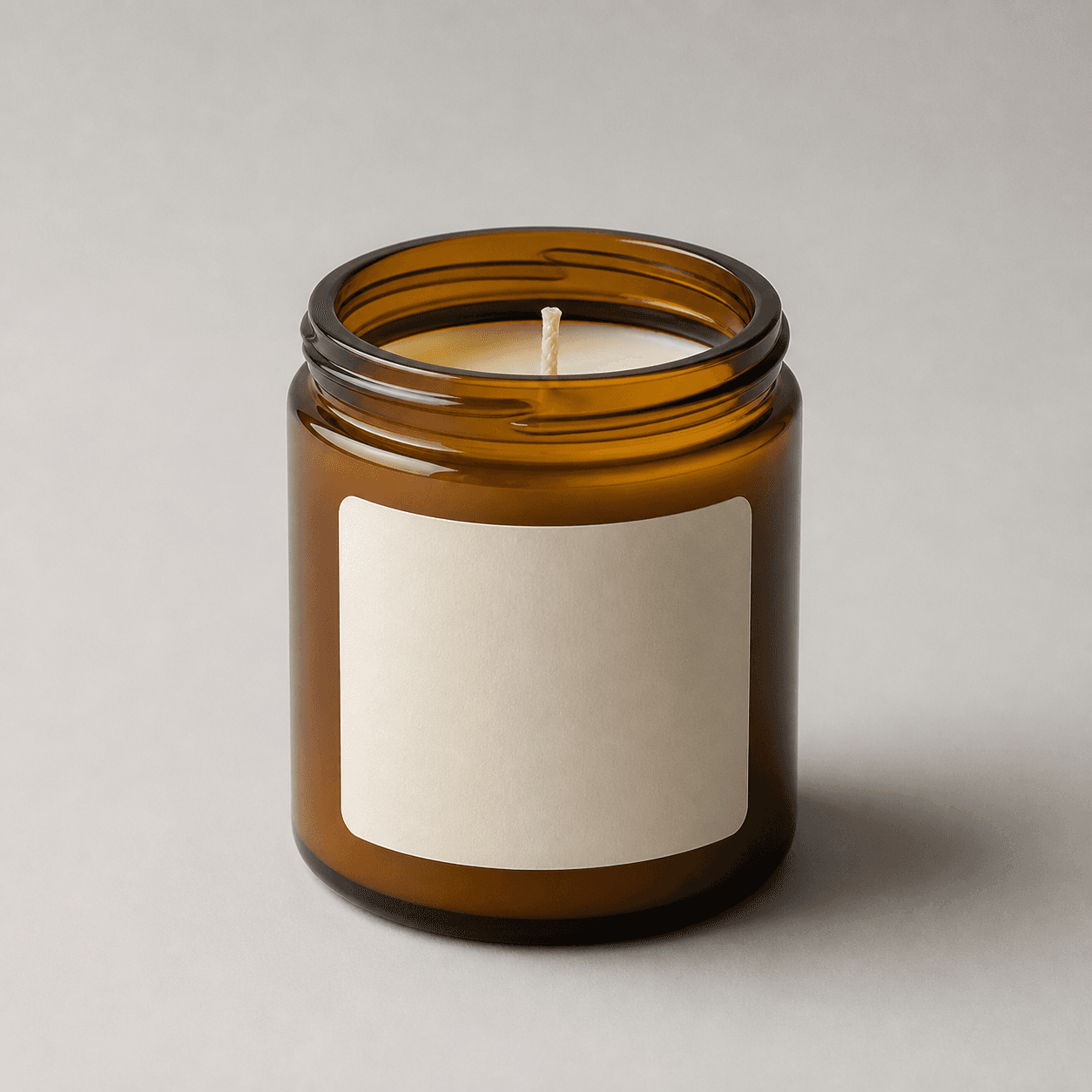
Use the supplied minimal glass jar candle as the identity reference, choose Airveek's product-scene studio setup, and frame a close three-quarter detail that keeps the front label, glass rim, centered wick, and wax surface clear. Use soft controlled light to manage reflections, leave enough margin for a square crop, and review the frame at full size and mobile-thumbnail size. Keep room mood and in-context scale in a separate lifestyle image.
Search task: scented candle detail product photo
Written by LIKA
The buyer question
Which detail should this scented candle product photo prove before a shopper buys?
Quick setup
- Goal
- Ecommerce product-detail gallery and mobile product thumbnail
- Output
- 1:1 square detail crop, 240 × 240 mobile-thumbnail check, Largest available master before destination-specific resizing
- Goal
- store-listing
- Mode
- product-scene
- Scene
- studio
Example Airveek result
How to create it
1. Upload the two supplied references
Add the supplied candle reference as the product input and the supplied morrow logo as the second input when the fictional demo brand is shown. Use the candle reference to preserve the rounded amber jar, open rim, pale wax, centered wick, and label shape. Keep the exact lowercase morrow wordmark and both sparkle stars from the supplied logo reference.
2. Choose the detail setup
In Airveek's product-fashion creator, set Mode to product-scene, Scene to studio, and Goal to store-listing. This keeps the frame focused on the jar, label, rim, wick, and wax rather than asking a room scene to carry the same proof.
3. Paste the candle-specific prompt
Ask for a close three-quarter view with the label facing forward and the wick, wax surface, and rim visible. Keep the lighting warm-neutral and controlled: a soft highlight can describe the glass, but no reflection should wash out the label or wax.
4. Generate one fresh detail result
Run one fresh detail job from the same candle and logo references when the provider is available. Select a generated result only after it preserves the jar, label mark, rim, wick, wax, and square-safe crop.
5. Review the crop before export
Compare the result with the supplied candle reference at full size and at a 240 × 240 mobile thumbnail. Reject changed glass color, jar geometry, label placement, logo shape, wick, wax, invented text, flame, smoke, or glare that hides a buyer detail. Keep the largest available master until the destination's current image requirements are confirmed.
Tested prompt
Use the supplied generic minimal glass jar candle reference and the supplied morrow logo reference as the only inputs. Apply the exact lowercase wordmark "morrow" with both sparkle stars naturally on the product's front label as its only brand mark; do not add other readable text. Create one close-up ecommerce detail photo for one scented candle. Preserve the exact rounded cylindrical amber glass jar shape, open rim, pale wax, centered wick, label shape and position, and visible materials. Frame a close three-quarter view that keeps the label facing forward while the wick, wax surface, and rim remain easy to inspect, with enough of the jar silhouette to support visual scale. Use controlled warm-neutral commercial light with a soft side highlight on the glass and gentle fill on the shadow side; keep glare off the label and wax. Keep a square-safe crop and the product dominant. Do not invent scent notes, burn time, wax type, dimensions, safety claims, a flame, smoke, extra text, extra products, watermarks, retailer logos, or promotional overlays.Recorded settings
- Goal
- store-listing
- Mode
- product-scene
- Scene
- studio
Common problems and fixes
Problem: The label is warped, unreadable, or replaced with extra copy.
Fix: Keep the label front-facing, use only the supplied exact lowercase morrow wordmark with both sparkle stars, and reject any invented scent, burn, or promotional text.
Problem: A bright reflection turns the glass or wax into a white patch.
Fix: Move to a larger diffused side source, add gentle fill on the shadow side, and check that the label and wax remain visible at thumbnail size.
Problem: The crop hides the rim, wick, label, or enough jar body to identify the product.
Fix: Pull back slightly, keep the front label centered, and preserve square-safe margin around the rim and base.
Problem: Flame, smoke, a lid, or room props take over the close-up.
Fix: Remove the extra scene elements from the detail prompt and reserve mood, flame, or in-context scale for a separate lifestyle job only when the supplied product direction supports it.
Problem: The image implies scent, burn performance, wax chemistry, size, or safety information.
Fix: Remove badges, rulers, labels, and unsupported copy. Keep those claims in verified product information rather than using the image as proof.
What to double-check
- The supplied image establishes visible shape and surface only: an amber-brown jar, open rim, pale wax, centered wick, and front label. It does not verify scent notes, burn time, wax type, vessel capacity, dimensions, or safety information.
- A close-up can show the label, rim, wick, wax surface, and visible glass finish; it cannot prove aroma, burn behavior, throw, materials beyond what is visibly established, or performance.
- Use a separate clean listing frame for fast whole-jar identification and a separate lifestyle frame for room mood and in-context scale; this page is the detail job.
- No final generated result is shown in this draft. Complete a matching Airveek detail generation and identity review before replacing the supplied reference in a product gallery.
Why this works
The candle's detail job is not to recreate the entire mood of a room. It is to make the visible buying proof legible: the jar's identity, the front label, the glass rim, the centered wick, and the wax surface. A close three-quarter frame with controlled reflections lets those areas read while leaving mood and in-context scale to the lifestyle sibling. Keeping a little of the full silhouette in the square-safe crop helps the shopper connect the close view to the same candle.
Before you export
- Compare the result with the source: rounded amber jar, open rim, pale wax, centered wick, label position, and visible glass finish should remain consistent.
- Confirm the exact lowercase morrow wordmark and both sparkle stars are the only added brand mark when the fictional demo brand is shown.
- Inspect the result at full size and at a 240 × 240 thumbnail so the label, rim, wick, wax, and jar silhouette still read at small size.
- Use controlled, diffused light to reveal the glass and wax without a hard reflection across the label or wax surface.
- Keep flames, smoke, lids, scent-note text, burn-time text, measuring graphics, and decorative props out of the close-up proof area unless the supplied product reference actually establishes them.
- Verify scent, burn time, wax type, capacity, dimensions, safety, and performance from product information rather than from the image.
Common questions
Which detail should this scented candle product photo prove?
Make the front label, jar edge, glass rim, centered wick, and wax surface easy to inspect in one close view. Keep the jar large enough to identify, but leave mood and in-context scale to a separate lifestyle frame so the detail image stays useful on a small product thumbnail.
Should I show the candle lit in the close-up?
Not for this detail frame. Keep the label, rim, wick, and wax surface clear first. If a later lifestyle image includes a flame or room glow, keep those elements from covering the jar or changing the product's visible identity.
Can a candle detail photo prove scent, burn time, or wax type?
No. A close image can show visible jar geometry, label placement, wick, wax surface, and reflections. Scent notes, burn time, wax composition, capacity, safety, and performance should come from verified product information, not from an image-only inference.
Where should the morrow mark appear on this demo candle?
When the fictional demo brand is shown, use the supplied logo reference on the front label as the only brand mark: keep the exact lowercase morrow wordmark and both sparkle stars, and add no other readable brand copy. Keep the mark part of the product label rather than adding it as a floating overlay.
Further reading
- Marketplace/category reference — Amazon marketplace reference
- Image link [image_link] - Google Merchant Center Help — Google Merchant Center Help
- The Complete Guide to Ecommerce Photography — Shopify