

Airveek field guide
Insulated Tumbler Product Photography: A Complete Airveek Workflow
Start with one accurate source for the 40 oz handled travel tumbler, then run separate Airveek listing, lifestyle, and detail jobs. Keep the sage body, handle, clear straw, transparent lid, and metal rim consistent; use a clean hero, a believable use setting, and a close crop that keeps the touch points readable on mobile.
Search task: insulated tumbler product photography guide
Written by LIKA
The buyer question
How do I plan a complete product-photo set for this insulated tumbler from one accurate source asset?
Your starting product
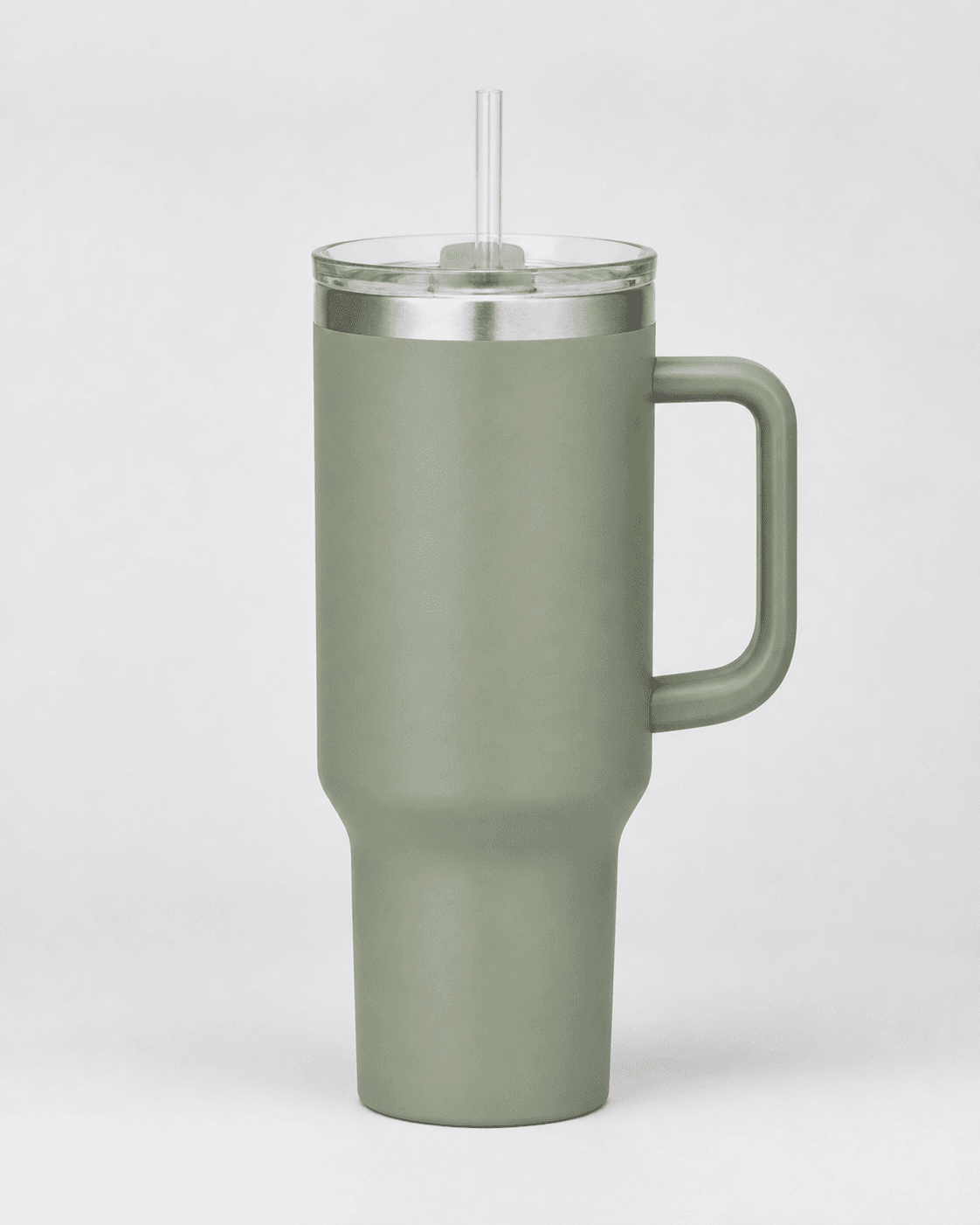
Start with a clear photo that shows the full product and the details shoppers need to see. Keep this reference nearby while you generate, compare, and refine each image.
Quick setup
- Goal
- Ecommerce product-photo set
- Output
- 1024 × 1024 px recorded review outputs, 1500 × 1500 px or larger when following Google Merchant Center best-performance guidance
Example Airveek result
How to create it
1. Lock the source details
Attach the supplied tumbler source and the supplied morrow logo reference. Before generating, note the sage body, handle, clear straw, transparent lid, metal rim, and tapered lower body so every job has the same identity checklist.
2. Build the clean listing frame
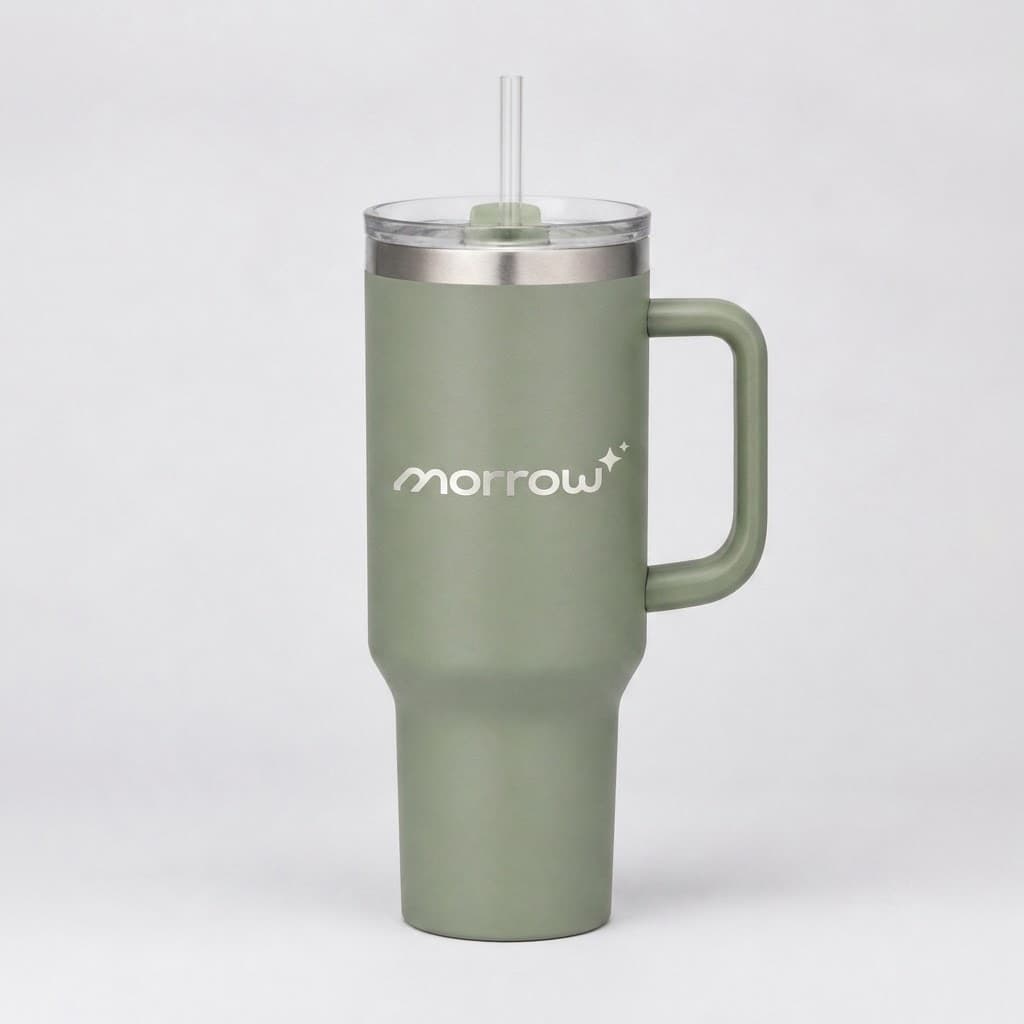
Choose Mode: product-scene, Scene: studio, and Goal: store-listing. Keep one complete tumbler centered on a neutral commercial background, with the full silhouette and handle visible. Review the square crop at thumbnail size before moving on.
3. Add everyday context
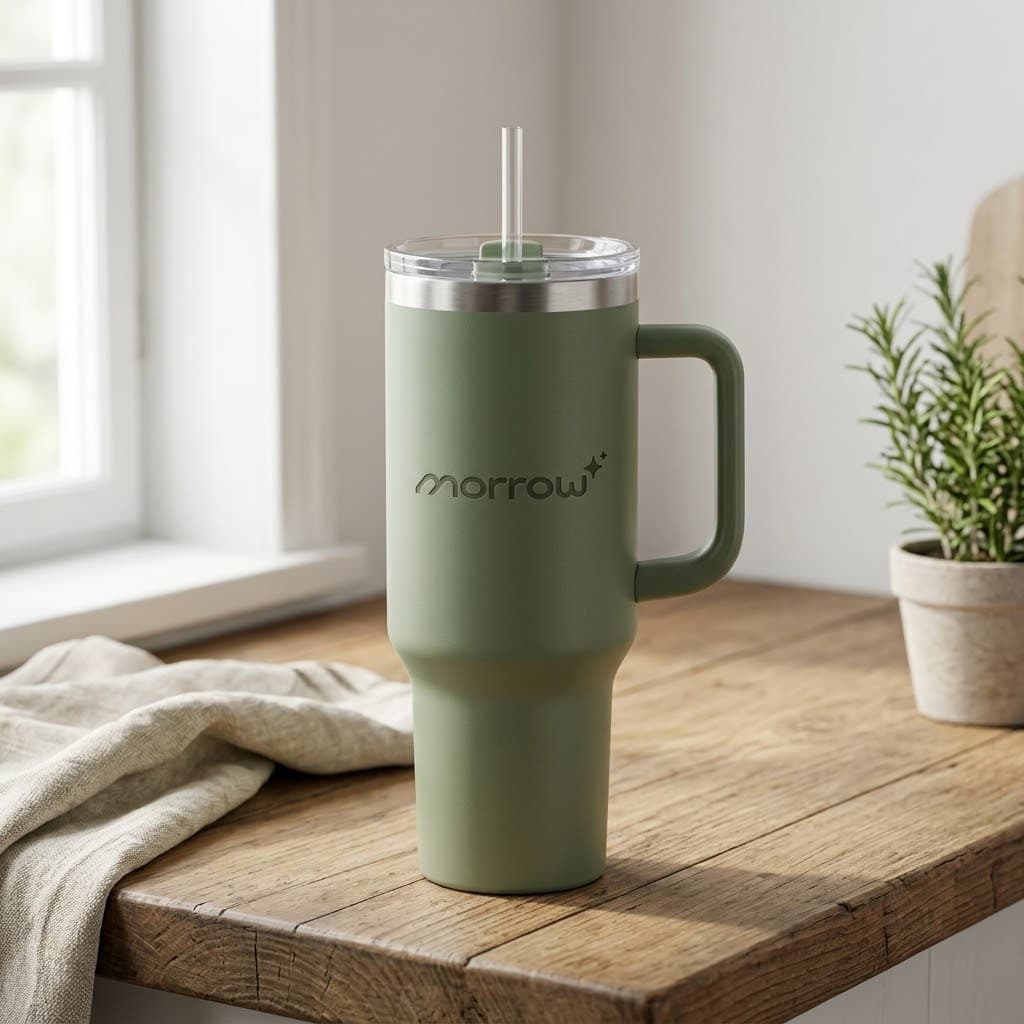
Run the lifestyle job separately with a restrained setting such as the recorded wood table, window light, folded textile, and plant. Let the scene communicate relative scale without covering the handle, lid, straw, or body; keep the tumbler dominant and crop-safe for mobile.
4. Make the touch-point detail
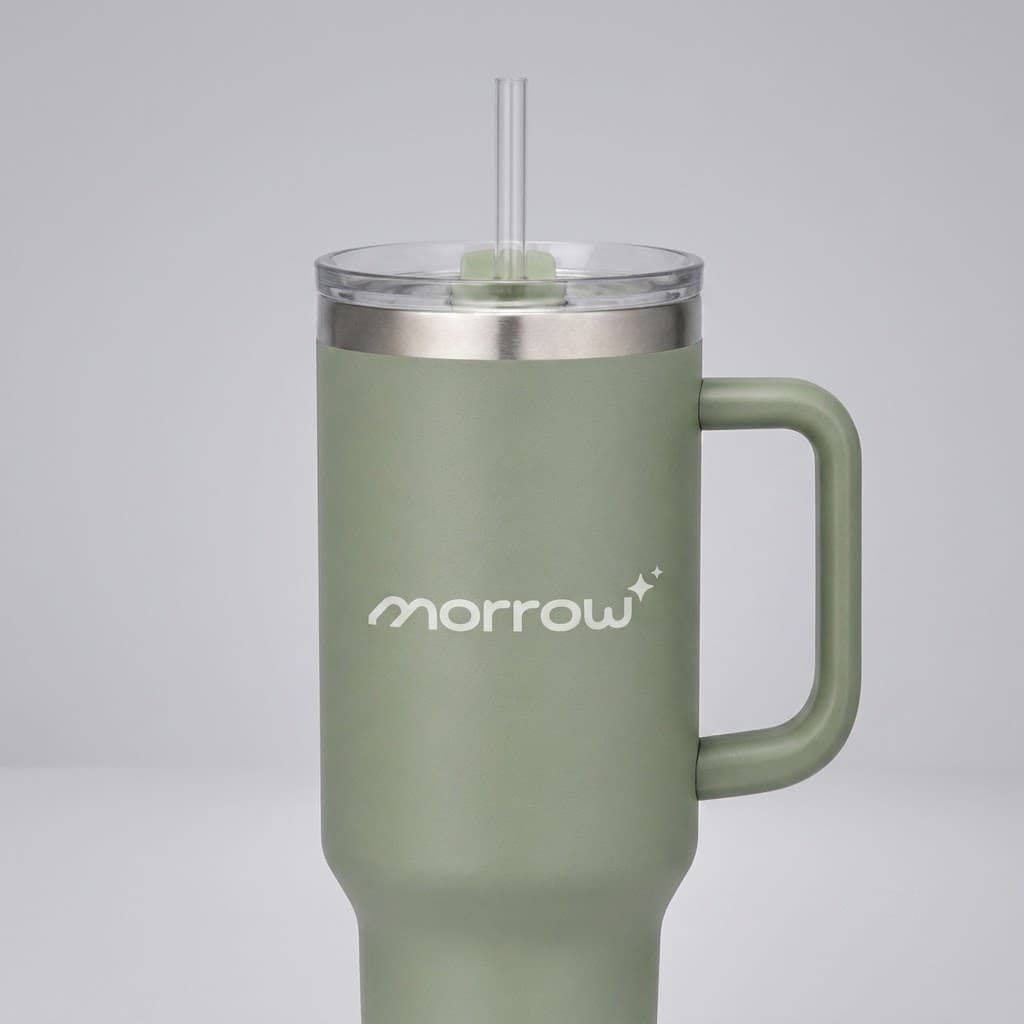
Choose Mode: product-scene, Scene: studio, and Goal: store-listing for the detail job. Use controlled light and a close crop that makes the handle, clear straw, transparent lid, and metal rim easy to inspect without changing the product geometry or material appearance.
5. Compare, select, and export
Compare each candidate against the source at full size and as a small mobile thumbnail. Keep one distinct image for each job, reject changed geometry or invented text, and export the selected frames at the destination channel's required dimensions and file format.
Tested prompt
Use the supplied fictional MORROW logo reference (second input) as the product's only brand mark. Apply the exact lowercase wordmark "morrow" with its two sparkle stars naturally to the product label, package, or product surface; preserve the mark without inventing other words. Create a coordinated ecommerce product-photo set for one insulated tumbler from one accurate source: one clean marketplace-safe listing frame, one premium lifestyle frame that shows everyday context and relative scale, and one close-up frame for the handle and lid. Keep the exact tumbler shape, handle, lid, clear straw, metal rim, and sage color unchanged across jobs. Do not add any other readable text, invented claims, extra products, watermarks, retailer logos, or promotional overlays.Common problems and fixes
Problem: The first detail direction rendered the clear straw as solid sage/green, changing a source-visible material.
Fix: State that the straw must remain clear and the lid transparent, preserve the source-visible materials, and compare the handle, lid, straw, rim, and body against the source before selection.
Problem: A lifestyle scene can let a table, textile, or plant compete with the tumbler or cover a touch point.
Fix: Use one restrained setting, keep the product dominant, and check the square and mobile crops with the handle and lid fully visible.
Problem: A tight crop can make the product larger while clipping the handle or drinking opening.
Fix: Leave safe space around the full silhouette, then inspect the crop at thumbnail size before exporting.
What to double-check
- A photo can show visible form, finish, handle, lid, straw, and relative context; it cannot verify exact capacity, insulation performance, leak resistance, care instructions, or internal construction.
- The recorded results are 1024 × 1024 review outputs. Export the selected frame at the destination channel's required full-size dimensions before publishing.
- A lifestyle setting suggests relative scale but is not a measured size demonstration. Add verified measurements separately when the buyer needs them.
Before you export
- The sage body, handle, clear straw, transparent lid, metal rim, and tapered lower body remain consistent across all three images.
- The listing frame shows one complete tumbler as the clear hero on a restrained background, with no extra products or promotional overlays.
- The lifestyle frame gives useful everyday context and relative scale while keeping the tumbler, handle, lid, and straw unobscured in a mobile crop.
- The detail frame makes the handle, clear straw, transparent lid, and metal rim readable without inventing dimensions or performance claims.
- The final export uses the destination's required dimensions and format, and the image still reads clearly as a small thumbnail.
Common questions
What should a complete insulated tumbler product-photo set show?
Use three jobs with three clear purposes: a clean listing frame to identify the complete tumbler, a lifestyle frame to show everyday context and relative scale, and a close-up frame to make the handle and lid easy to inspect. Starting every job from the same accurate source keeps the set coherent.
How can I show tumbler size without adding an unsupported dimension?
Use a restrained everyday setting for relative context, such as the wood-table scene in this workflow, while keeping the tumbler unobscured. Treat that context as visual orientation, not a measurement; add verified dimensions separately when they matter to the buying decision.
Can a product photo prove the tumbler's capacity or insulation performance?
No. The image can show visible shape, finish, handle, lid, straw, and relative context, but capacity and performance need verified product information. Keep those claims out of the image prompt unless the product documentation supports them.
Further reading
- The Complete Guide to Ecommerce Photography — Shopify
- Google Merchant Center image requirements — Google Merchant Center
- Handled tumbler marketplace category reference — Amazon marketplace