

Airveek field guide
Throw Blanket Clean Listing Product Photo: Keep Texture and True Color Clear
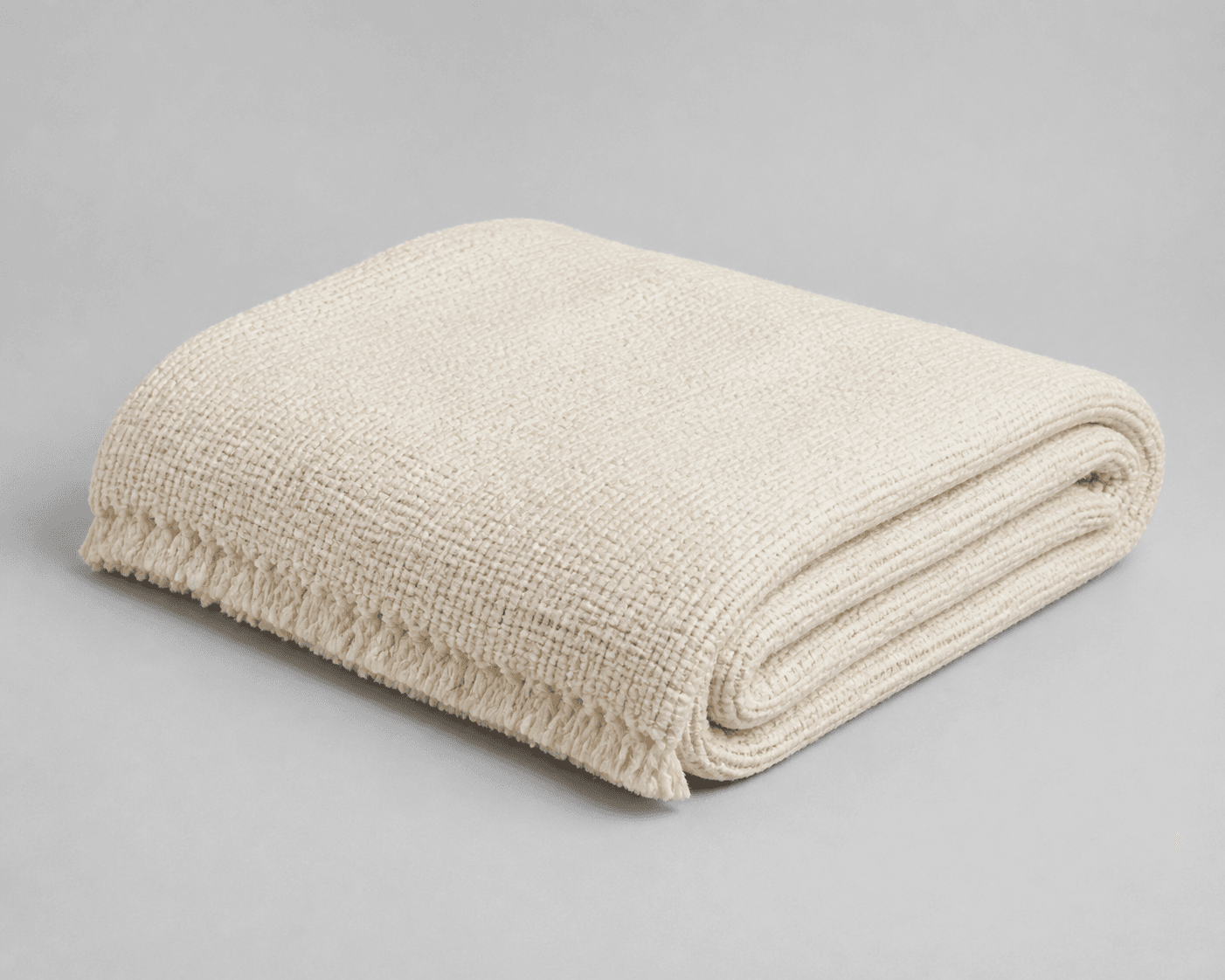
Use the supplied soft textured throw blanket as the identity reference, then create one folded, product-dominant studio image on a quiet neutral background. Keep the light-neutral color, woven surface, rolled fold, and finished fringe edge visible, aim for a square-safe crop, and preserve the exact lowercase morrow wordmark with its two sparkle stars as the only brand treatment. Review the full image and a mobile thumbnail before export.
Search task: throw blanket clean listing product photo
Written by LIKA
The buyer question
How do I create a clean listing image for this throw blanket while keeping the product identity accurate?
Quick setup
- Goal
- Ecommerce or marketplace main product image
- Output
- 1:1 square-safe master crop, 240 × 240 mobile-thumbnail check, Largest useful master before destination-specific resizing
- Goal
- store-listing
- Mode
- product-scene
- Scene
- studio
Example Airveek result
How to create it
1. Add the two supplied references
Upload the soft textured throw blanket as the identity reference and add the supplied morrow logo as the second input. Use the blanket to preserve the light-neutral color, woven surface, rolled fold, and finished fringe edge; use the logo only for the exact lowercase morrow wordmark and its two sparkle stars.
2. Choose the clean listing setup
In Airveek's product-fashion creator, set Mode to product-scene, Scene to studio, and Goal to store-listing. Keep this page focused on fast whole-product identification; send sofa context to the lifestyle sibling and close weave or edge proof to the detail sibling.
3. Build one product-dominant composition
Show one complete folded blanket against a quiet neutral commercial background. Keep the blanket large enough to occupy roughly 75–90% of the frame, preserve the rounded rolled fold on the right and the finished fringe along the front, and leave a small breathing margin for square crops.
4. Light for weave and true color
Use soft directional light from the side with gentle fill on the shadow side. The light should create enough relief for the woven surface and fringe to read while avoiding hard hotspots, flat overhead light, or a warm cast that makes the light-neutral blanket look like another color.
5. Keep the supplied mark exact
When a product surface or package branding area is shown, keep the lowercase morrow wordmark and both sparkle stars together and unchanged. Remove every other readable word, floating watermark, retailer mark, or invented claim before export.
6. Check the crop before export
Compare the result beside the supplied reference at full size, in a centered 1:1 crop, and at 240 × 240. Confirm that the blanket is still the only hero, the weave and fringe remain visible, the color is stable, and the mark is not clipped. Keep the largest clean master and confirm the destination's current requirements before resizing.
Tested prompt
Use the supplied soft textured throw blanket reference as the identity anchor and the supplied fictional morrow logo reference as the second input. Create one clean marketplace-safe listing photo for one folded throw blanket on a quiet neutral commercial studio background. Preserve the exact visible light-neutral color, woven texture, folded geometry, rounded rolled fold, finished fringe edge, and any visible product surface. Apply the exact lowercase wordmark "morrow" with its two sparkle stars naturally to the blanket's product surface or a simple package element; preserve only that mark and invent no other readable words. Make the complete blanket the clear hero, keep buyer-visible shape and material details sharp, frame the blanket at roughly 75–90% of the image space, and leave safe margin for a square crop and a 240 × 240 mobile check. Do not add a sofa, extra blanket, competing product, invented dimensions, fiber content, warmth, care, performance claim, watermark, retailer logo, promotional overlay, or any other readable text.Recorded settings
- Goal
- store-listing
- Mode
- product-scene
- Scene
- studio
Common problems and fixes
Problem: The blanket is too small, or the fringe is clipped in the listing crop.
Fix: Remove props, keep one complete folded blanket at roughly 75–90% of the frame, pull back enough to preserve the fringe, and retest the centered square crop and 240 × 240 thumbnail.
Problem: The woven surface looks flat or disappears into the background.
Fix: Move the light to the side, add gentle fill on the darker side, and use a quiet background with enough tonal separation for the weave and fringe to read.
Problem: The light-neutral blanket shifts warm, gray, or another visible color.
Fix: Use neutral controlled light, reduce colored reflections, compare beside the supplied reference, and reject any result whose visible color no longer matches.
Problem: The folded geometry drifts, duplicates appear, or the image becomes a lifestyle scene.
Fix: Reuse the supplied blanket reference, repeat the complete-product and one-hero constraints, remove furniture and extra blankets, and keep sofa context for the lifestyle sibling.
Problem: The supplied mark is distorted or extra words appear.
Fix: Re-add the supplied logo as the second input, preserve the exact lowercase morrow wordmark and both sparkle stars together, and remove every other readable text element or floating mark.
Problem: The image implies exact size, fiber content, warmth, care, or performance.
Fix: Remove rulers, badges, callouts, and invented claims. Use the image for visible product identity only and place verified specifications in the product information.
What to double-check
- The supplied reference establishes visible light-neutral color, woven texture, folded form, rounded rolled fold, and finished fringe edge. It does not establish exact dimensions, fiber content, warmth, care, durability, or performance.
- A clean listing image can support product identification and visual comparison; it cannot prove exact measurements or unshown material specifications.
- No generated branded listing result is selected in this draft. Run the supplied preset with both references, then compare the result with the source before using it in a storefront.
- Keep the lifestyle and detail siblings separate so a sofa, prop, shadow, or tight crop does not hide the blanket's complete silhouette, weave, or finished edge.
Why this works
A clean listing frame answers the first shopper question quickly: what is the product and does it match the variant being offered? One folded blanket on a quiet studio background keeps the silhouette, light-neutral color, woven surface, rolled fold, and fringe edge visible. Soft side light adds texture without turning the product warm or glossy. Room context and close texture deserve their own linked image jobs.
Before you export
- Compare the result with the supplied blanket reference: preserve the light-neutral color, woven surface, folded geometry, rounded rolled fold, and finished fringe edge.
- Show one complete blanket as the clear hero and aim for roughly 75–90% product occupancy in the main frame; do not add extra blankets or competing products.
- Use a quiet neutral commercial background and soft side light with gentle fill so the weave and fringe read without glare or a warm color cast.
- Keep the exact lowercase morrow wordmark and both sparkle stars together when branding is shown; remove every other readable brand text or overlay.
- Inspect the full image, a centered 1:1 crop, and a 240 × 240 mobile thumbnail; make sure the silhouette, weave, fringe, and mark remain legible.
- Keep the largest clean master and confirm the destination's current file, pixel, and background requirements before export.
- Verify exact dimensions, fiber content, warmth, care, durability, and performance from product information rather than inferring them from the image.
Common questions
What should a clean listing image for a throw blanket show?
Show one complete blanket clearly enough to identify its visible color, folded silhouette, woven surface, rolled fold, and finished fringe edge. Keep the background quiet and the product dominant so the shopper can understand what the listing represents at a glance. Use a separate lifestyle frame for room context and a separate detail frame for close texture proof.
How much of the image should the blanket fill?
For a main product image, aim for roughly 75–90% of the frame while keeping the entire folded blanket and fringe inside the crop. This is a framing target from Google Merchant Center guidance, not a substitute for checking the destination's current requirements. Recheck the centered square crop and a 240 × 240 thumbnail before export.
Should I use a sofa scene as the main throw blanket listing photo?
Use the clean folded studio frame for fast product identification, then add a sofa or room scene as supporting context when you need to show how the blanket sits in use. Keep the furniture from becoming a second hero, and link the clean listing, lifestyle, and close detail jobs so each image answers one shopper question.
How can I make the throw blanket's weave visible without changing its color?
Use soft directional light from the side with gentle fill, keep the background tonally separate, and compare the result beside the supplied reference. Avoid a warm cast, hard glare, or heavy edit that makes the woven surface look richer or different than the source. Save close weave and edge proof for the separate detail image.
Can a listing photo prove the throw blanket's exact size or fiber content?
No. A folded product image can show visible shape, color, surface, and edge finish, while a room or furniture scene can provide a visual scale cue. Exact dimensions, fiber content, warmth, care, durability, and performance should come from verified product information rather than visual inference.
Further reading
- Airveek: All-in-One AI Image Generator — Airveek
- Image link [image_link] | Google Merchant Center Help — Google Merchant Center Help
- Additional image link [additional_image_link] | Google Merchant Center Help — Google Merchant Center Help
- How to fix: Image too generic | Google Merchant Center Help — Google Merchant Center Help
- The Complete Guide to Ecommerce Photography — Shopify
- Shopify Help Center | Taking product photographs — Shopify Help Center
- Digital Assets Product Shot Guide—Throw Blankets — Best Buy Canada partner guide
- How the heck am I supposed to take pictures of large blankets? — Reddit r/crochet discussion
- Need advice of Bedsheet business photography — Reddit r/productphotography discussion
- Marketplace/category reference — Amazon marketplace reference