

Airveek field guide
Create a clean carry-on luggage listing product photo
Start with the supplied hard-shell spinner carry-on as the identity reference, then use Airveek’s product-scene workflow with a studio setting and store-listing goal. Keep one complete suitcase centered in a square frame, leave every wheel and the telescoping handle inside the crop, preserve the shell finish and the exact lowercase morrow mark with both sparkle stars, and remove all extra text or overlays.
Search task: carry-on luggage clean listing product photo
Written by LIKA
The buyer question
How do I create a clean listing image for this carry-on luggage while keeping the product identity accurate?
Your starting product
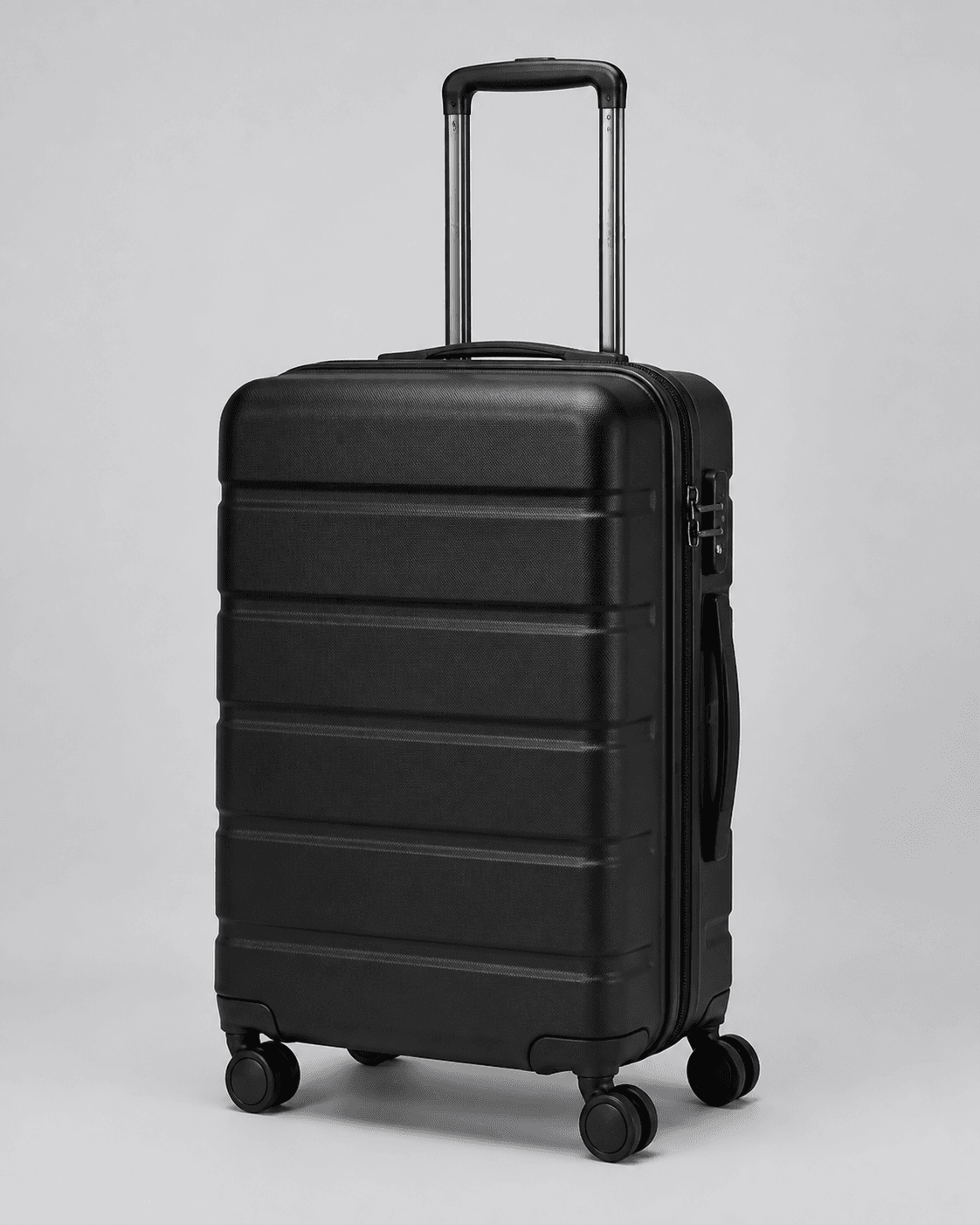
Start with a clear photo that shows the full product and the details shoppers need to see. Keep this reference nearby while you generate, compare, and refine each image.
Quick setup
- Goal
- Marketplace main product image
- Output
- 1024 × 1024 recorded working result, 1:1 square-safe master crop, 240 × 240 mobile-thumbnail review, Largest useful destination export before resizing
- Crop
- Leave breathing room below the wheels and above the handle; aim for roughly 75–90% product occupancy when the destination uses that guidance.
- Goal
- store-listing
- Mode
- product-scene
- Scene
- studio
- Export
- Keep the largest clean master and confirm the destination's current image, format, and size rules before resizing.
- Lighting
- Neutral, even commercial light with a soft floor shadow so the black shell ribs and hardware remain distinct.
- Composition
- One complete carry-on centered as the clear hero; keep all wheel assemblies, the telescoping handle, side handle, zipper edge, and lock hardware inside the crop.
- Aspect ratio
- 1:1 square
- Mobile check
- Review the intended crop at 240 × 240 before export.
Example Airveek result

How to create it
1. Add the product reference
Upload the carry-on image as the identity anchor. Keep the complete shell, ribs, telescoping handle rails, side handle, zipper edge, lock hardware, and wheel assemblies visible in the reference before you generate.
2. Add the supplied logo reference
For the fictional demo version, add the supplied logo reference as the second input. Preserve the exact lowercase morrow wordmark and both sparkle stars as the only brand treatment, placed naturally on the product surface, label, or package.
3. Choose the listing setup
Open Airveek’s product-fashion creator and set Mode to product-scene, Scene to studio, and Goal to store-listing. Use a square composition so the full carry-on remains easy to identify in a catalog or mobile thumbnail.
4. Write one product-first prompt
Ask for one complete suitcase on a neutral commercial studio background. Tell Airveek to preserve the exact shape, wheels, handle, finish, and visible buyer details, and to remove every added readable word, claim, product, watermark, and promotional overlay.
5. Protect the crop and lighting
Leave clear space below the wheels and above the telescoping handle. Use even commercial light with a soft floor shadow so the black shell ribs, zipper edge, lock hardware, and handles separate from the background without glare or crushed detail.
6. Check the result at two scales
Compare the result with the reference at full size and at 240 × 240. Confirm that one complete carry-on is still the hero, all wheel assemblies and the handle remain inside the crop, and the exact morrow mark stays together and readable when branding is shown.
7. Export for the destination
Keep the largest clean master, then confirm the destination’s current image rules before resizing. Use a stable HTTPS image URL for the final asset, write factual alt text, and keep the main listing frame free of added overlays.
Tested prompt
Use the supplied fictional MORROW logo reference (second input) as the product's only brand mark. Apply the exact lowercase wordmark "morrow" with its two sparkle stars naturally to the product label, package, or product surface; preserve the mark without inventing other words. Create one clean marketplace-safe listing photo for one carry-on luggage. Keep the exact suitcase shape, wheels, handle, and finish unchanged. Use a neutral commercial studio background, make the complete product the clear hero, and keep all buyer-visible shape and material details sharp. Do not add any other readable text, invented claims, extra products, watermarks, retailer logos, or promotional overlays.Recorded settings
- Crop
- Leave breathing room below the wheels and above the handle; aim for roughly 75–90% product occupancy when the destination uses that guidance.
- Goal
- store-listing
- Mode
- product-scene
- Scene
- studio
- Export
- Keep the largest clean master and confirm the destination's current image, format, and size rules before resizing.
- Lighting
- Neutral, even commercial light with a soft floor shadow so the black shell ribs and hardware remain distinct.
- Composition
- One complete carry-on centered as the clear hero; keep all wheel assemblies, the telescoping handle, side handle, zipper edge, and lock hardware inside the crop.
- Aspect ratio
- 1:1 square
- Mobile check
- Review the intended crop at 240 × 240 before export.
Common problems and fixes
Problem: The wheels are clipped or disappear in the mobile thumbnail.
Fix: Reduce the suitcase scale slightly, leave more floor margin below the wheel assemblies, and retest the square crop at 240 × 240.
Problem: The telescoping handle blends into the background.
Fix: Leave open space above the handle and use a gentle tonal contrast behind the rails while keeping the light soft enough to avoid bright reflections.
Problem: The black shell becomes a featureless block.
Fix: Use even commercial light with restrained side separation and a soft floor shadow so the ribs, zipper edge, lock hardware, and handles remain distinct.
Problem: The scene introduces extra products or turns the listing into a lifestyle image.
Fix: Return to one carry-on on a neutral studio background. Move airport context to the lifestyle sibling and reserve close functional proof for the detail sibling.
Problem: The demo-brand treatment rewrites the mark or adds extra words.
Fix: Use the supplied logo reference as the second input, preserve the exact lowercase morrow wordmark and both sparkle stars, and remove every other readable brand word or overlay.
What to double-check
- The available carry-on reference is exterior-only, so it does not establish the interior layout, packing capacity, dimensions, weight, or airline fit.
- Use the clean listing frame for fast product identification; use a separate detail view to show the opening or interior only when that view is supported by the exact product reference.
- A studio image can show visible shape, finish, hardware, and crop quality, but it cannot prove wheel performance, lock strength, durability, or another unshown product property.
- The current recorded Airveek result covers the listing job. Create and review travel-context and close-detail jobs separately before treating them as finished supporting images.
Why this works
A clean carry-on listing image has one job: make the exact product easy to identify before a shopper opens the supporting views. One centered suitcase, a quiet studio background, and enough margin around the wheels and handle keep the shell, finish, and hardware readable in a small crop. Lifestyle context can move to the airport-scene sibling, while the detail sibling can handle the opening or interior when it is supported.
Before you export
- Show one complete carry-on and preserve the shell shape, horizontal ribs, finish, handle rails, side handle, zipper edge, lock hardware, and wheel assemblies.
- Keep the wheels and telescoping handle inside the square-safe crop with breathing room below and above.
- Use a neutral commercial studio background and soft, even light that reveals black shell texture without glare or crushed shadows.
- When branding is shown, use only the exact lowercase morrow wordmark with both sparkle stars and no other readable brand text.
- Check the image at full size, in the intended crop, and at 240 × 240 before export.
- Keep exact dimensions, capacity, weight, airline fit, and performance statements in verified product information rather than inferring them from the image.
- Keep the largest clean master, then use a stable HTTPS image URL and confirm the destination’s current export rules.
Common questions
How do I create a clean listing image for this carry-on luggage while keeping the product identity accurate?
Use the carry-on as the identity reference, choose product-scene with a studio setting and store-listing goal, and keep one complete suitcase centered in a square frame. Preserve the shell, finish, wheels, handle, zipper edge, and lock hardware; remove extra products, claims, and overlays; then check the crop at full size and 240 × 240.
What should the main carry-on luggage image show first?
Show the complete suitcase as one clear unit, with the wheel assemblies and telescoping handle inside the crop. Keep the background restrained so shoppers can judge the visible shell shape and finish quickly. Use additional views for airport context, close hardware, opening, or interior instead of forcing every detail into the main frame.
Can a clean exterior listing image prove packing capacity or airline fit?
No. An exterior image can show the shell, wheels, handle, and visible hardware, but it cannot establish measured dimensions, interior layout, packing capacity, weight, or airline acceptance. Use verified information for those decisions and create a separate interior or detail view only when the exact product reference supports it.
How should the supplied morrow mark appear on the fictional carry-on?
Add the supplied logo reference as the second input and place the exact lowercase morrow wordmark with both sparkle stars naturally on the product surface, label, or package. Keep the mark together and keep every other readable brand word, retailer mark, and promotional overlay out of the image.
Further reading
- Google Merchant Center: Image link and image guidelines — Google Merchant Center Help
- Google Merchant Center: Additional image link — Google Merchant Center Help
- The Complete Guide to Ecommerce Photography — Shopify
- Google Search Central: Image SEO best practices — Google Search Central
- ManyBaggers discussion: what carry-on luggage gets wrong — ManyBaggers community discussion
- Marketplace/category reference — Amazon marketplace reference