

Airveek field guide
Nonstick Frying Pan Detail Product Photo: Show the Cooking Surface
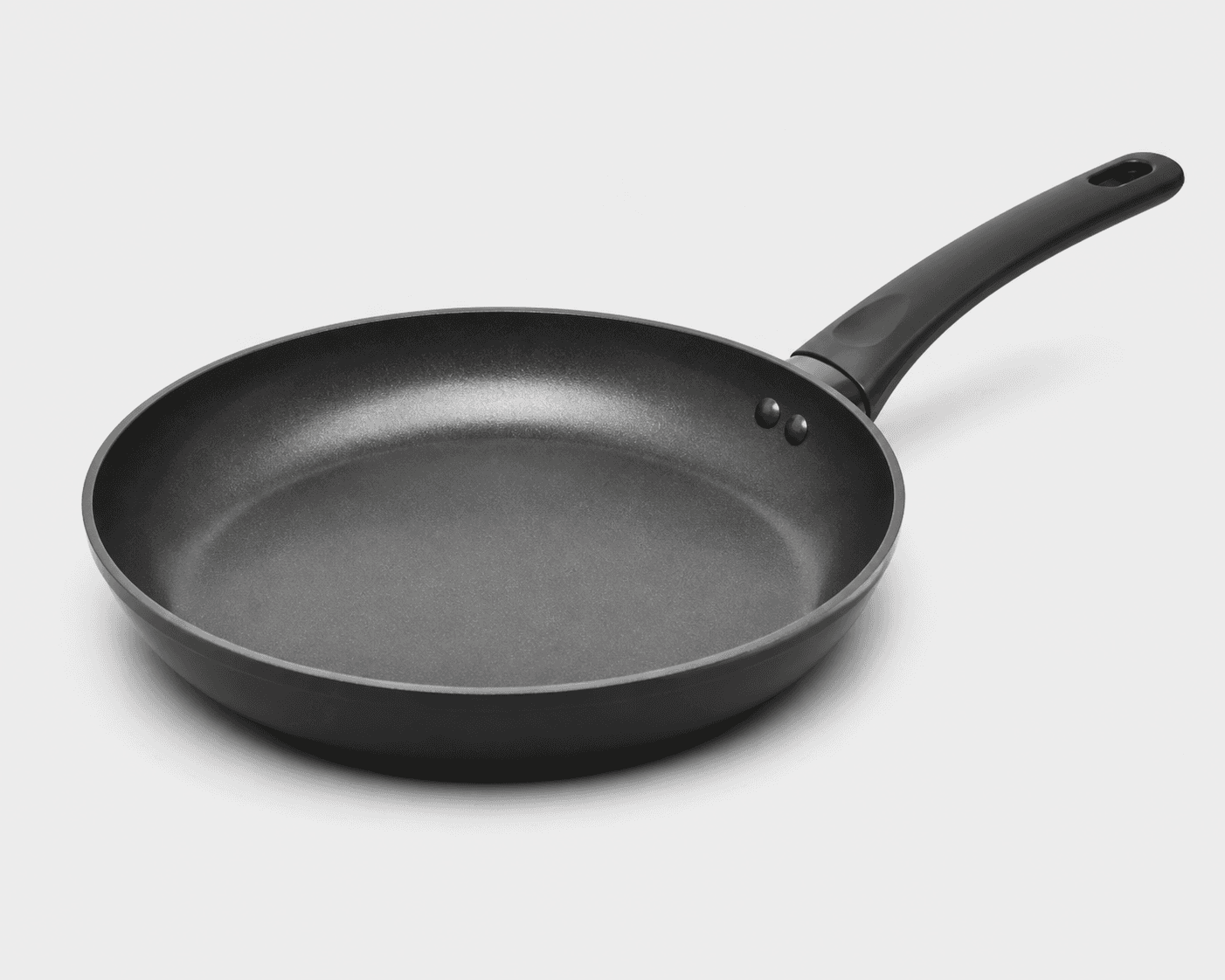
Use the supplied 12-inch nonstick frying-pan reference to build one close, three-quarter detail frame that keeps the cooking surface, raised rim, handle connection, and handle end easy to inspect. In Airveek, choose product-scene, studio, and store-listing, keep the supplied lowercase morrow mark exact when branding is shown, and review the pan at full size and mobile-thumbnail size before export. Use a separate stovetop frame for food and scale.
Search task: nonstick frying pan detail product photo
Written by LIKA
The buyer question
Which detail should this nonstick frying pan product photo prove before a shopper buys?
Quick setup
- Goal
- Ecommerce product-detail gallery and mobile product thumbnail
- Output
- 1:1 square detail crop, 240 × 240 mobile-thumbnail check, Largest available export before destination-specific resizing
- Goal
- store-listing
- Mode
- product-scene
- Scene
- studio
Example Airveek result
How to create it
1. Upload the two supplied references
Add the supplied frying-pan reference as the product input and the supplied morrow logo as the second input when the fictional demo brand is shown. Use the pan reference to preserve the round body, gray cooking surface, raised rim, long black handle, oval hanging opening, and two visible fasteners. Keep the exact lowercase morrow wordmark and both sparkle stars from the supplied logo reference.
2. Choose the detail setup
In Airveek's product-fashion creator, set Mode to product-scene, Scene to studio, and Goal to store-listing. This keeps the frame focused on a close product detail instead of asking a lifestyle scene to carry the same proof.
3. Paste the pan-specific prompt
Ask for the cooking surface, raised rim, handle connection, handle end, and visible fasteners in one close view. Keep the pan large and square-safe, use diffused commercial light, and reserve food, steam, and stovetop context for a separate lifestyle job.
4. Generate one fresh detail result
Run one fresh detail job from the same pan and logo references. Select a generated result only after it passes the identity, crop, and thumbnail checks.
5. Review the crop before export
Compare the result with the supplied pan reference at full size and at a 240 × 240 mobile thumbnail. Reject changed geometry, surface, rim, handle, fasteners, color, invented text, or glare that hides the cooking area. Keep the largest available export until the destination's current image requirements are confirmed.
Tested prompt
Use the supplied generic 12-inch nonstick frying-pan reference and the supplied morrow logo reference as the only inputs. If branding is shown, place the exact lowercase wordmark "morrow" with both sparkle stars naturally on the product or package, and add no other readable brand copy. Create one close-up ecommerce detail photo for one nonstick frying pan. Keep the exact round pan shape, gray cooking surface, raised rim, black long handle, oval hanging opening, two visible handle fasteners, finish, and color unchanged. Make the cooking surface, rim, handle connection, and handle end easy to inspect in a square-safe frame. Use controlled commercial light that reveals the surface without hot glare; keep the pan dominant and avoid food or steam covering the cooking area. Do not invent coating claims, dimensions, features, product text, extra products, watermarks, or promotional overlays.Recorded settings
- Goal
- store-listing
- Mode
- product-scene
- Scene
- studio
Common problems and fixes
Problem: Food or steam covers the cooking surface.
Fix: Remove the meal from the detail job, keep the pan empty, and use a separate stovetop lifestyle frame for food and context.
Problem: A bright reflection erases the surface texture or raised rim.
Fix: Use a larger diffused light source, soften the highlight, and check the surface again at thumbnail size.
Problem: The handle connection or hanging opening is cropped away.
Fix: Pull back slightly, leave square-safe margin around the handle, and keep enough surrounding geometry to confirm the same pan.
Problem: The generated pan changes geometry, finish, color, or readable text.
Fix: Compare against the supplied source, repeat the identity constraints and exact lowercase morrow mark, and reject the changed result.
Problem: The image implies a dimension or cooking performance it cannot prove.
Fix: Remove rulers, badges, and unsupported copy. Keep measurements, coating, compatibility, care, and performance in verified product information.
What to double-check
- The supplied image is a generic visual reference. It shows the pan's visible shape, surface, rim, handle, and fasteners but does not verify coating chemistry, physical measurements, heat compatibility, care, or performance.
- A detail photo can make the surface and handle easy to inspect; it cannot prove release performance, scratch resistance, heat distribution, safety, or other product specifications.
- A close detail frame supports a gallery. Pair it with a clean listing frame and a separate stovetop or lifestyle frame before building the full product-photo set.
- No generated result is shown here yet; complete a matching Airveek detail generation before using a generated image in the gallery.
Why this works
The pan's buying proof is in the interior and the points that connect it to a usable object: cooking surface, raised rim, handle connection, handle end, and visible fasteners. A close detail frame lets those areas read without making a meal or decorative setting do the job. Keeping the pan dominant and the frame square-safe gives the crop a chance to survive a small product-gallery thumbnail.
Before you export
- Compare the result with the source: round pan body, gray cooking surface, raised rim, black handle, oval hanging opening, and two visible fasteners should remain consistent.
- Inspect the result at full size and at a 240 × 240 thumbnail so the surface, rim, handle connection, and handle end still read at small size.
- Use controlled, diffused light to reveal the surface without a hard glare or reflection that erases the cooking area.
- Keep food, steam, measuring graphics, and decorative props away from the close-up proof area; create a separate stovetop frame for use and scale.
- When branding is shown, use the supplied exact lowercase morrow wordmark with both sparkle stars and no other readable brand copy.
- Verify dimensions, coating, cooktop compatibility, care, safety, and performance from product information rather than from the image.
Common questions
Which detail should this nonstick frying pan product photo prove?
Make the cooking surface, raised rim, handle connection, handle end, and visible fasteners easy to inspect in one close view. Start with the empty pan so the detail stays readable; use a separate stovetop or food-use frame for context and scale.
Can a detail image prove that this pan is truly nonstick or safe on a cooktop?
No. The image can show the visible surface and its relationship to the rim and handle, but release performance, coating chemistry, heat behavior, cooktop compatibility, care, and safety need verified product information or testing.
Should I include food or a stovetop in the close-up?
Keep the close-up clean when the surface and handle attachment are the proof. A separate lifestyle image can show food use and a familiar stovetop context, while the detail image remains focused on the product areas a shopper needs to inspect.
How do I show the pan's size without adding an unverified measurement graphic?
Keep the close frame focused on the pan's visible proportions and handle relationship. If size context matters, use a separate scale-oriented image or verified product dimensions; do not add a ruler, badge, or dimensional text that the source does not establish.
Further reading
- Cook + Create Hard Anodized Nonstick Frying Pan — Rachael Ray product gallery
- 7.4 Product photos — Sofeast product inspection sample
- Tramontina Professional Fusion 8-Inch Non-Stick Fry Pan — Oico Home product gallery
- Easy Clean Aluminum Nonstick Frying Pan — Farberware Cookware product gallery
- Additional image link [additional_image_link] | Google Merchant Center Help — Google Merchant Center Help
- Any suggestion for large nonstick skillet without inside rivets? — Reddit r/Cooking community discussion
- I dislike rivets in fry and sauce pan so much — Reddit r/cookware community discussion
- Image link [image_link] | Google Merchant Center Help — Google Merchant Center Help
- The Complete Guide to Ecommerce Photography — Shopify
- Marketplace/category reference — Amazon marketplace reference