

Airveek field guide
How to Show a Black Sunglasses Frame and Lens in Airveek
Create a detail-and-scale image for your classic polarized sunglasses by starting with a clear reference, then tuning the composition, light, crop, and detail visibility for the exact shopping moment. This guide gives you the practical sequence, tested prompt, settings, fixes, and export checks so the product is easy to understand on both desktop and mobile.
Search task: Which detail should this black sunglasses product photo prove before a shopper buys?
Written by LIKA
The buyer question
How do I create a detail-and-scale image for a classic polarized sunglasses?
Your starting product
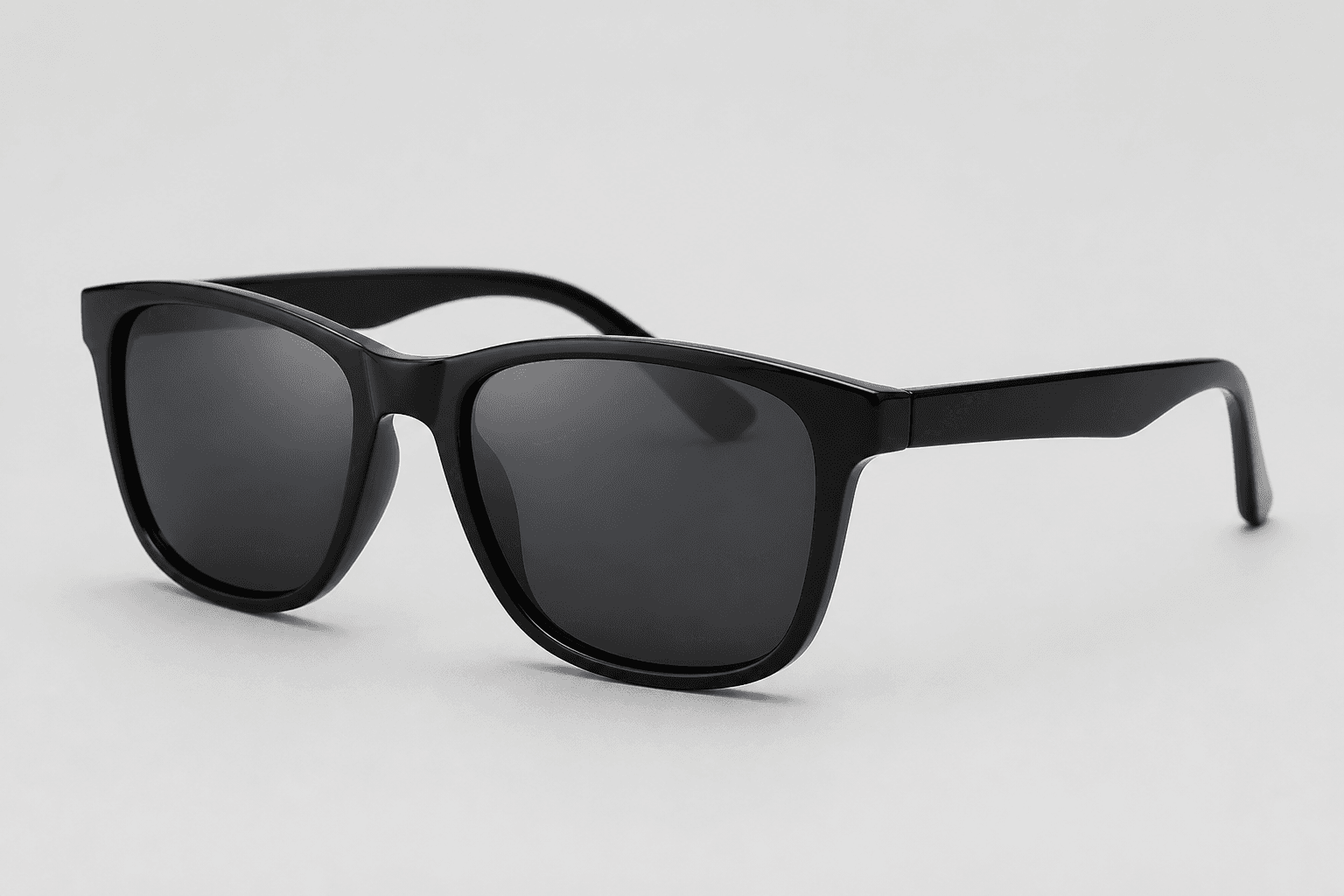
Start with a clear photo that shows the full product and the details shoppers need to see. Keep this reference nearby while you generate, compare, and refine each image.
Quick setup
- Goal
- Ecommerce product photography workflow
- Output
- 1024 × 1024 px, 1:1 square crop
- Goal
- store-listing
- Mode
- product-scene
- Scene
- studio
Example Airveek result
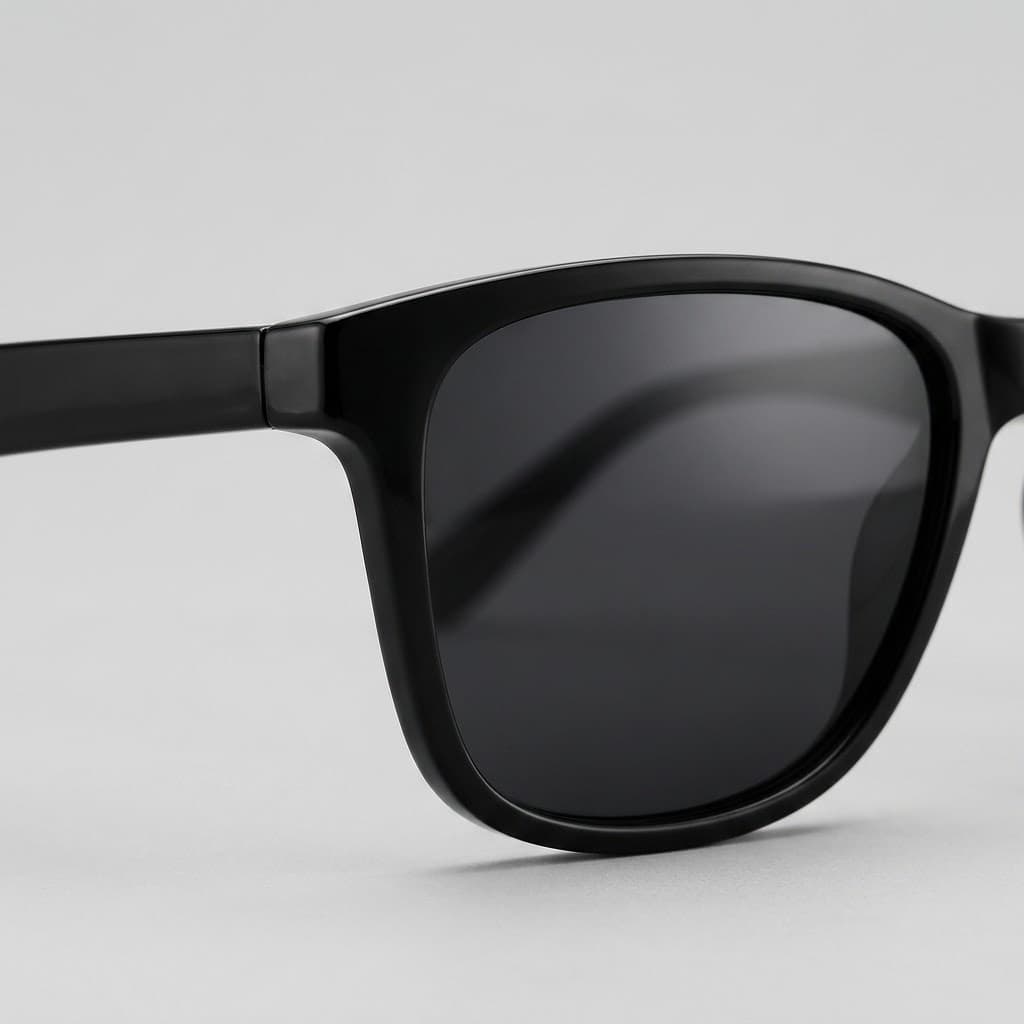
How to create it
1. Choose the reference
Upload a clear view of a classic polarized sunglasses with the shape and finish easy to read.
2. Set the scene
Choose a close framing that reveals texture, finish, controls, stitching, or another buyer-critical detail.
3. Tune light and framing
Keep the classic polarized sunglasses prominent, balance highlights and shadows, and leave enough breathing room for the final crop.
4. Check the shopping view
Review the result at desktop and mobile thumbnail size; make sure the intended detail is still the first thing a shopper sees.
5. Export and reuse
Apply the Quick setup dimensions and save the strongest result as the starting point for related product images.
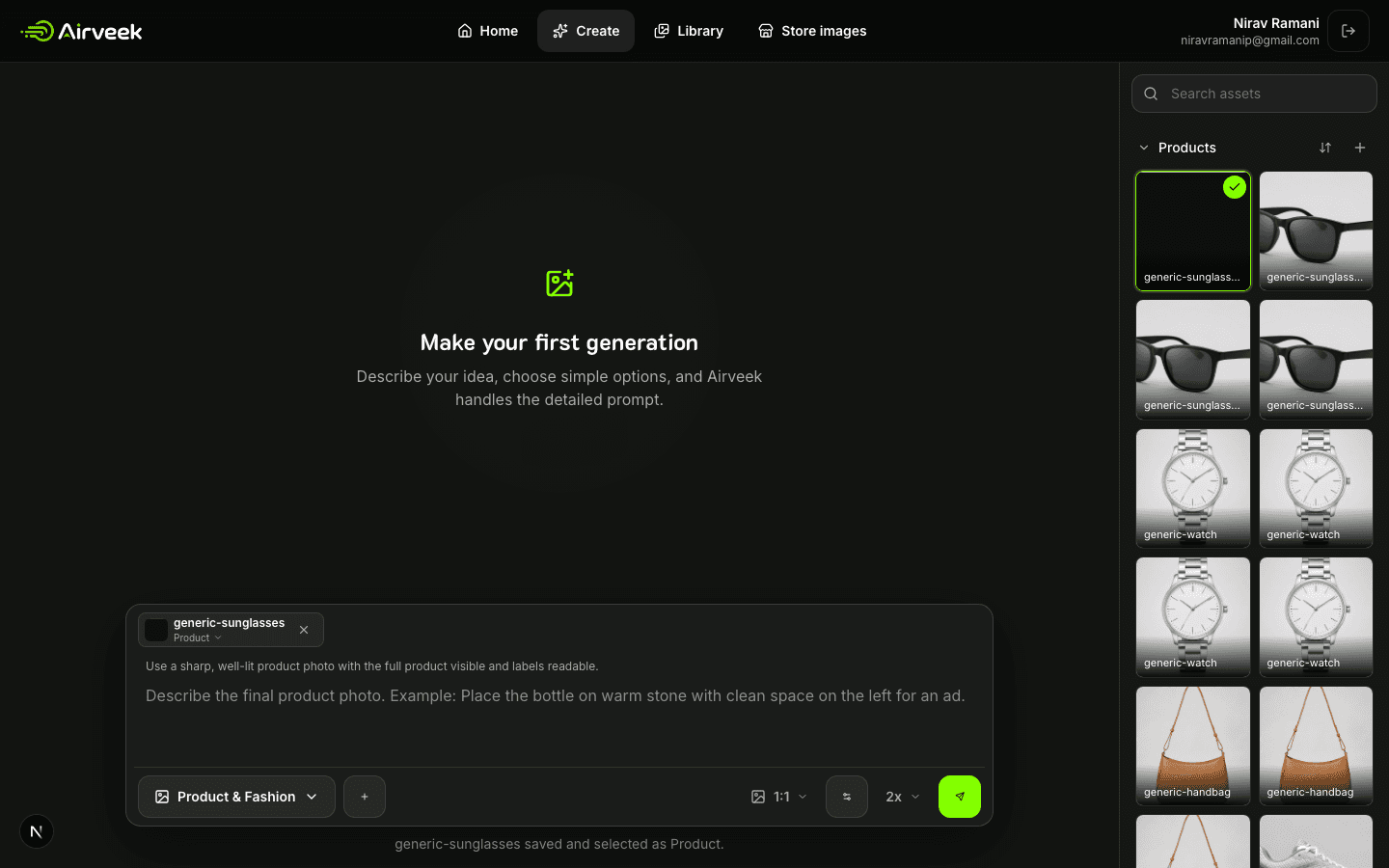
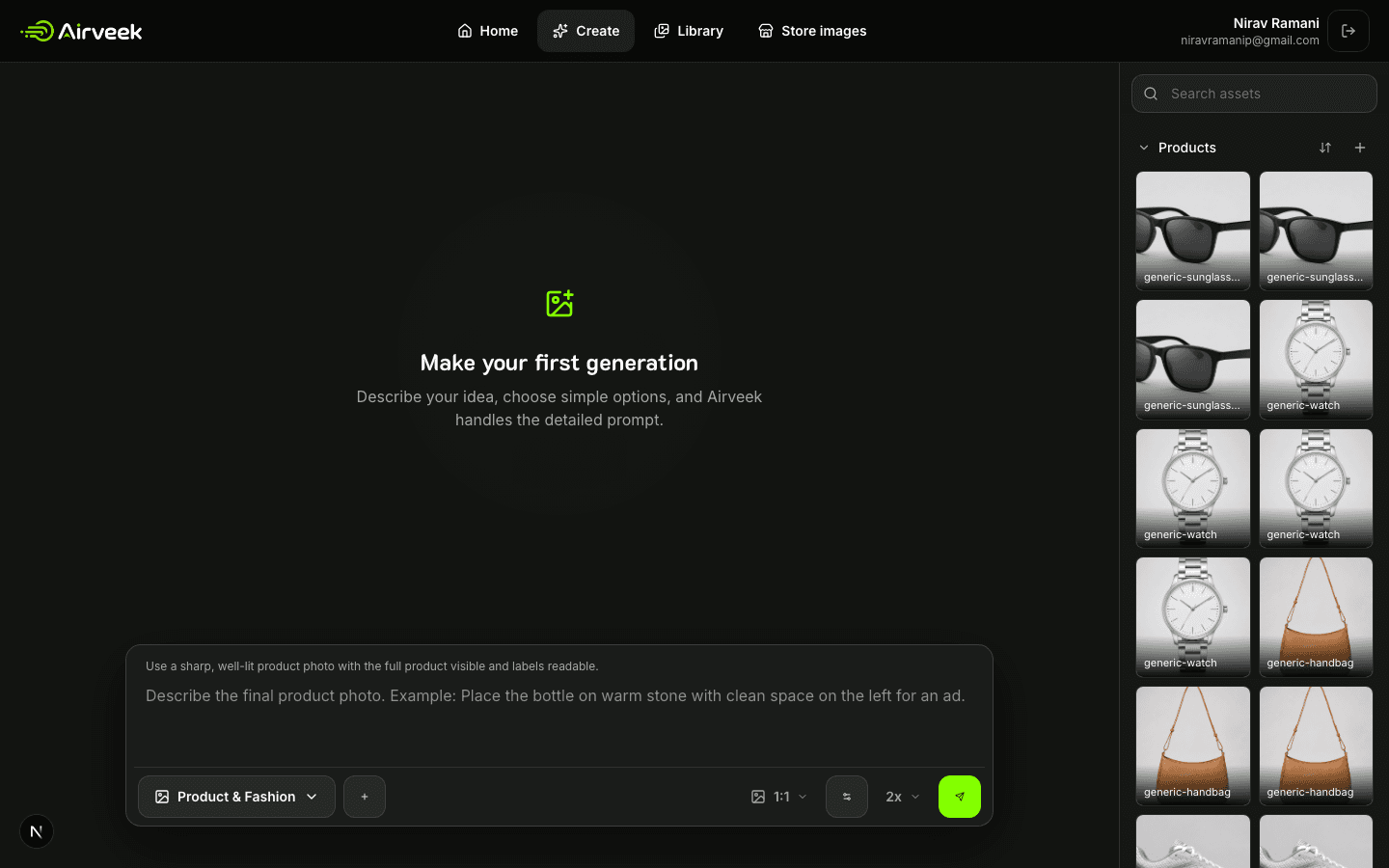
Workflow recording
Follow these captures to repeat the Airveek workflow for the same image task.
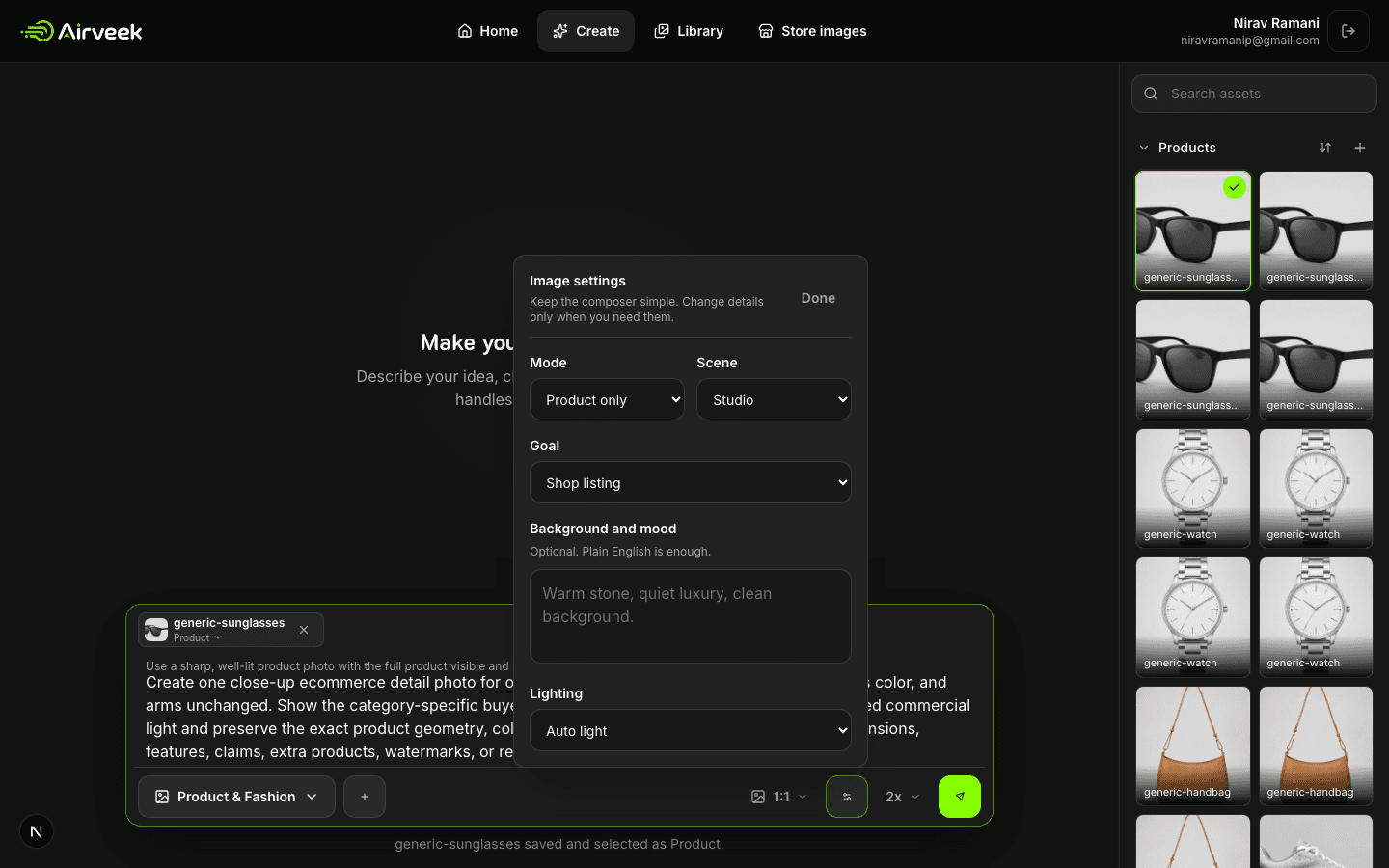
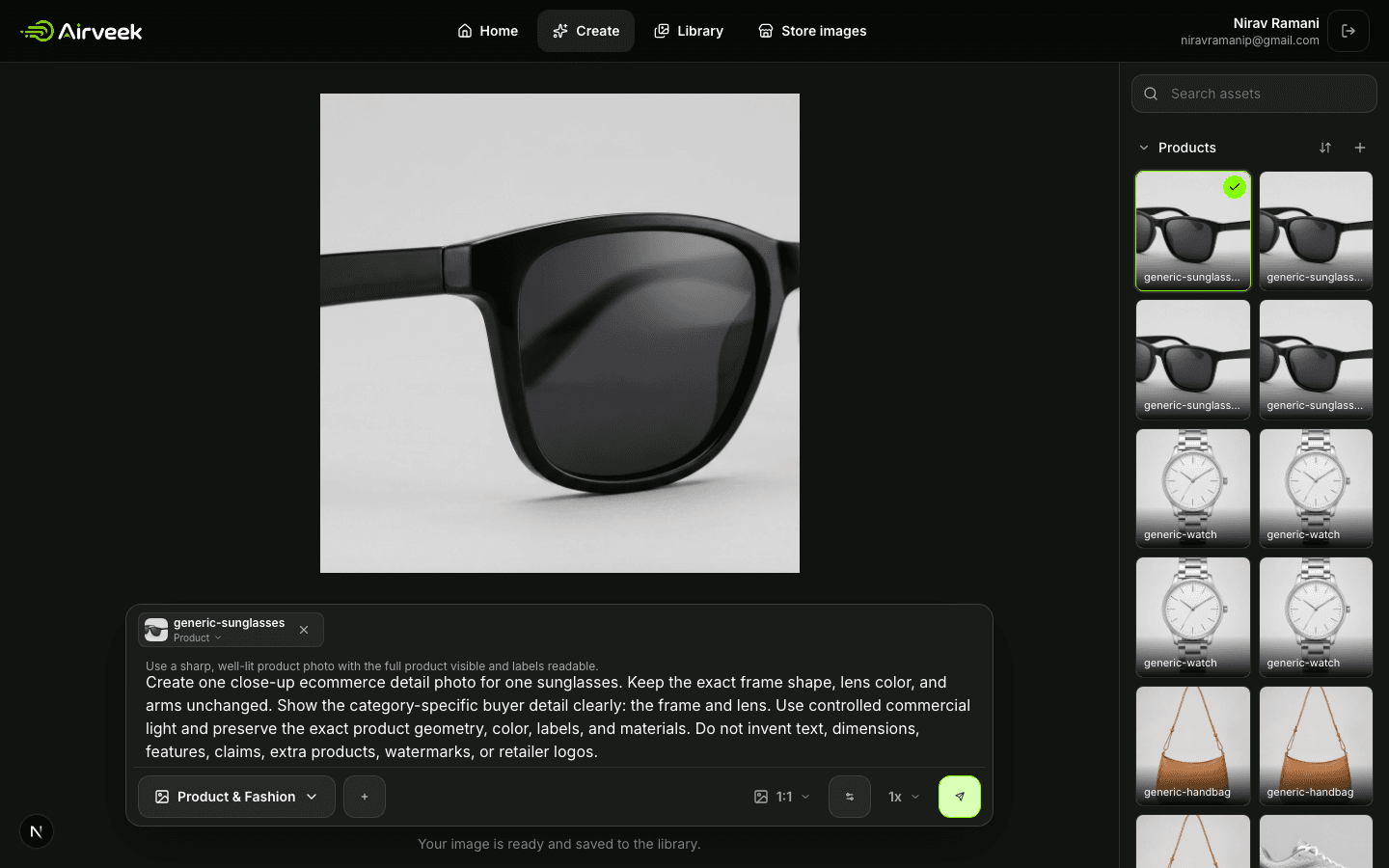
Tested prompt
Create a detail-and-scale image for a classic polarized sunglasses. Use the supplied reference as the visual anchor and keep the product shape, materials, color, and buyer-visible details consistent. Compose the frame so the product is understood instantly, with lighting and context that support the shopping goal. Keep the crop clean, the subject prominent, and every important detail readable at mobile thumbnail size.Recorded settings
- Goal
- store-listing
- Mode
- product-scene
- Scene
- studio
Common problems and fixes
Problem: The classic polarized sunglasses feels too small or generic.
Fix: Move the subject closer, simplify the surrounding scene, and increase separation so detail-and-scale image reads immediately.
Problem: Important finish or shape details disappear at thumbnail size.
Fix: Use a simpler background, stronger edge contrast, and a slightly tighter crop; then compare the result at the smallest real placement.
Problem: The lighting changes the perceived color or material.
Fix: Reduce colored reflections, use a neutral key light, and compare the output beside the reference before exporting.
What to double-check
- Tiny edges, reflections, and text-like details can shift during generation; zoom in and compare the final classic polarized sunglasses image before exporting.
- A dramatic background or light change can affect perceived color and scale; check the image in the same crop and thumbnail size your store uses.
Why this works
The page answers one narrow buyer task and makes the tested workflow reproducible while stating what the image cannot prove.
Before you export
- The classic polarized sunglasses fills the frame enough to understand at a glance.
- The key detail for detail-and-scale image remains visible and sharp.
- The crop and spacing still work in a small mobile thumbnail.
- Lighting and background separate the product without distracting props.
- The exported dimensions and file format match the destination store or channel.
Common questions
Which composition works best for detail-and-scale image?
Use a close, stable frame with light skimming across the important surface. Keep the detail centered and include just enough surrounding shape to explain scale.
How do I keep the classic polarized sunglasses recognizable?
Use one clear reference, keep the subject large in frame, and compare shape, material, color, and buyer-critical details after every iteration.
What should I check before export?
Review the crop at thumbnail size, confirm the hero detail is visible, then export the tested dimensions and format listed in Quick setup.
Further reading
- Google Merchant Center image requirements — Google Merchant Center
- Product photography workflow guidance — Shopify
- Polarized sunglasses marketplace reference — Amazon marketplace